Auk Summer: Part 2 Tysties

Auk Summer: Part 1 was all about razorbills - Part 2 is about Black Guillemots, known locally on Shetland as tysties.  

Unlike the other auks, the tysties stay around Shetland all year round. In the winter they are mottled black and white, but in summer they are a gorgeous solid black with very distinctive white wing patches.  The constants throughout the year are the dramatic red legs and even more dramatic red gape.

There are a lot of breeding tysties at the south end of Shetland.  Trouble is, unlike the puffins or common guillemots, they don't gather in big colonies so you have to go out and find them.

Tysties seem to like nest sites that face straight out to sea - and while this is certainly an effective way to stay out of sight and reach of (land-based) predators it also makes it a wee bit challenging for your average land-based photographer.  In my (limited) experience the key to locating a tystie nest site is to keep your eyes and, particularly, ears open while wandering the cliff tops.  

Tysties will regularly roost close to their nest and will call to their mates to encourage them onto the same area of cliff.  The tystie call is a very characteristic high-pitched whistle and, once you recognise it, is a very reliable alert that there are tysties around.  Very regularly the call will let you know there is a tystie around and you'll be able to get a good idea where the nest is - and you'll realise that there isn't going to be any way to see it!

Just occasionally though you'll be able to find a nest site on a curved cliff face, and you'll be able to see the nest entrance without falling into the sea - and maybe you'll even be able (if you are sufficiently patient) to get a glimpse of the nestling inside the nest site.

Last summer I identified an active nest site but wasn't able to spend enough hours watching to see anything more than the shadow of the young tystie.  This year I was able put in the hours (alongside watching other auks) to see (from a distance, I should add) the parents regularly bringing food into the nest, and even occasionally to see the youngster emerging from the nest hole.

My favourite tystie picture from the season was of the almost-ready-to-fledge tystie peering out the mouth of the burrow.

And next year? In addition to spending more time watching the burrow with the nestling (I'm optimistic that it'll be used again), I've spotted a number of additional sites where I'd like to spend longer watching next season. 


Auk Summer: Part 1 Razorbills

This year I was able to spend most of May to August on Shetland - and that meant I was able to spend a lot of time with the various auks during their breeding season.  During those four months I took a lot of pictures - and with the long northern evenings I would regularly be out late (and occasionally early in the mornings too) watching the bird life around the various headlands at the south end of Shetland.

However, there is a downside to this.  Each evening I would attempt to do a very quick skim through the pictures I'd taken and pick out a few that gave a flavour of the day and share them on places such at Twitter and Instagram.  It generally isn't until I get back to my Oxford desk that I get time to go through the pictures again and to get a sense of the pictures from the season.

Over the next three blog posts (including this one) - I'll say a bit about three of the species of auks I've spent time with this summer and share a few of my favourite pictures of each from this season.  

Starting with Razorbills.

I think I regard these as a real bonus this year.  My perception is that there were more razorbills around this year than last, and that they were spending more time in photographically accessible places (particularly around Sumburgh Head). It was lovely to be able to watch the pairs bonding early in the year and to then be able to at least get glimpses of the chicks before they jump.

I love watching all the auks - but I've got a particular affection for the razorbills. I think it might be their crisp formal attire and the incredibly cool (and understated) bills.

My favourite razorbill picture from this year?  It's got to be the family group (looks like an old-fashioned formal group photograph) gathered around the youngster.  This was the last time I saw the youngster - mostly it had been tucked away behind a parent - the next time I visited this bit of cliff the nest site was deserted (and the time after that, a gang of guillemots had taken possession).

And for next year? I want to find a location where I can watch (and photograph) the razorbills coming into a nest site other than looking down on the nest from high above - that'll need some early season scouting next year.


Monthly Report, August 2021

From Auks to Orca

Very pleased to be able to extend the Shetland Summer through most of August - but eventually the list of things-to-be-done-in-Oxford did get long enough to require a few days back in the over-crowded southeast of England.

First week of August: Puffins start to head out for winter


  • Reporting Days: 31

  • Location: Mostly ZE3 - with a bit of OX3 towards the end of the month

  • Miles walked: 140

  • Miles driven: 928

  • Gardens Tended: 2

  • Puffins Seen: Lots (mostly in the first few days of the month)

  • Orchids Seen: None

  • Orca Seen: Six

  • Photographs Taken: Thousands (but not quite as many thousands as last month)

The disappearance of the puffins is only one part of the autumnal changes around the south end of Shetland.  The other auks disappear too - with the tysties being the last to abandon their nests. And the waders reappear around the feeding grounds having fledged their young elsewhere.  Some of the birds disappear quietly at the end of their breeding season - others seem to want to shout about it.  However by mid-August the cliffs have been left to fulmars..

Black Guillemot: Would the last auk to leave, please turn out the lights.

Black-tailed Godwit

Kittiwake: Shout

Fulmar: Reclaiming the cliffs

It's not just about the birds. Shetland is one of the best places in the UK for whale watching (OK, tell me somewhere better?). After a relatively quiet few weeks (in whale terms) the Shetland south mainland got a real treat in mid August when a pod of orca (or it might have been two pods combined forces) spent a day methodically touring every bay and voe around the south end looking for seals.  We opted to pick our spot on a convenient headland and just sit and wait until the orca came to us. 

Orca - in West Voe of Sumburgh

Most of the bird photographs were again taken around Sumburgh Head - but I also got to spend time around Quendale Bay (ideal for paddling) and the Pool of Virkie (not so good for paddling)

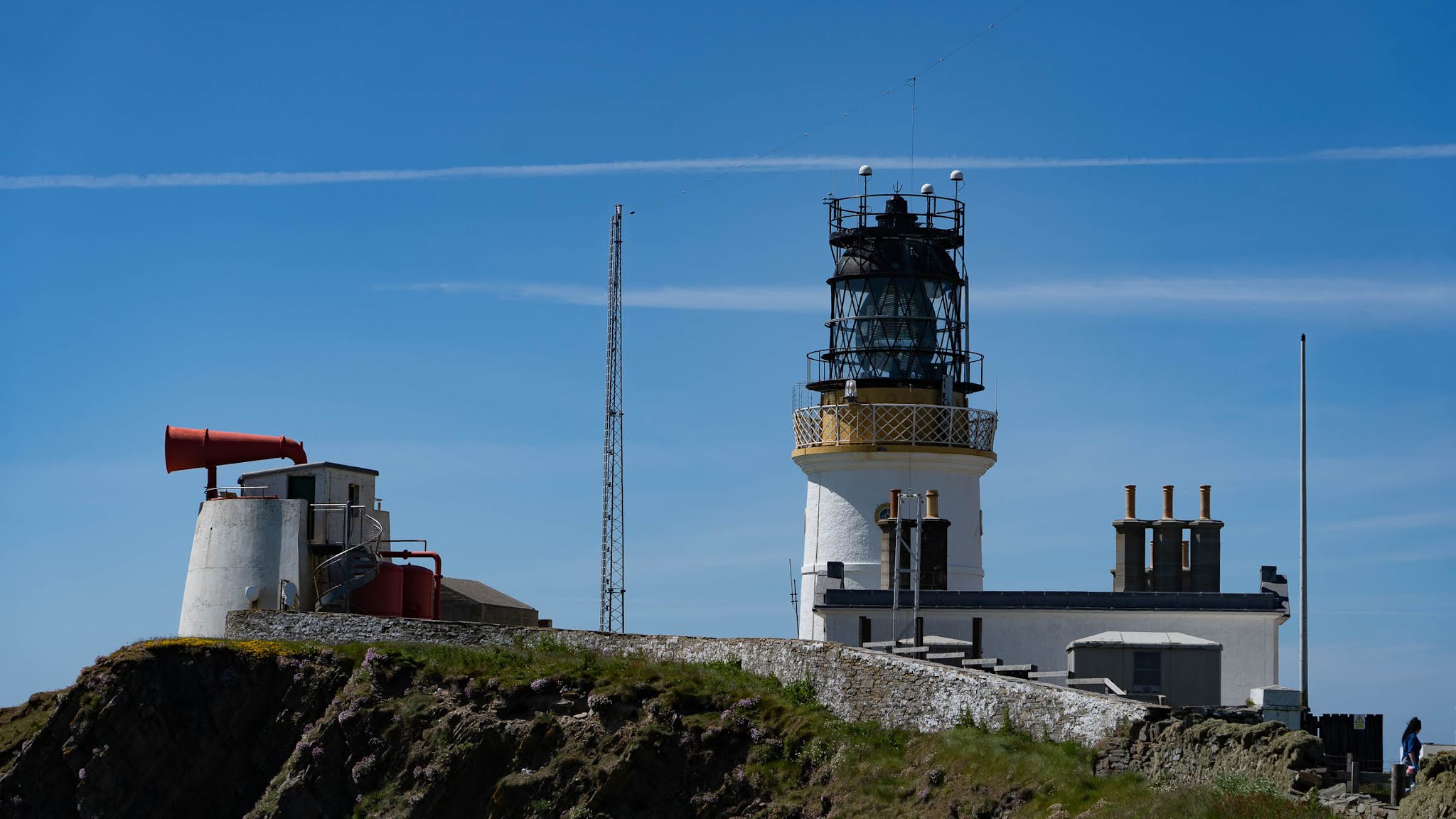
Sumburgh Head: everyone should have a favourite lighthouse

Quendale Bay: summer crowds

Pool of Virkie: Harper's Marina

And finally, I did drag myself away from Shetland (very temporarily).

Aberdeen: Arriving at sunrise

Oxford: C S Lewis Nature Reserve


Monthly Report, July 2021

It's really good to be able to write an All Shetland monthly report. 

And if I was going to write a one word report it would be "Auks", and the slightly longer (four word) version would be "Auks at Sumburgh Head".

Blue skies over Sumburgh Head

  • Reporting Days: 31

  • Location: Entirely ZE3 (with very occasional outings to ZE1& ZE2)

  • Miles walked: 141

  • Miles driven: 363

  • Gardens Tended: 1

  • Puffins Seen: Hundreds (and a lot of other auks too)

  • Orchids Seen: Quite a lot!

  • Photographs Taken: Many thousands

Puffin in the mayweed

July is without doubt the peak time for watching and photographing auks around the south end of Shetland - the four species of auks (guillemot, razorbill, black guillemot and puffin) do their own thing to their own time scales, but July is the point in the season when the youngsters are most visible (and the adults are busiest doing their feeding).

Black guillemot with butterfish

Muttering Puffins

Razorbills plus youngster

Puffling ready to fledge

Adult razorbill

By the end of July the guillemots and razorbills have all gone (there might be 1 or 2 exceptions!), the pufflings have mostly gone and the adult puffins are gathering ready to depart and the tysties (black guillemots) are in the later stages of rearing their young.

Black guillemot nestling

And just in case you were getting the idea that auks are the only thing to lure one to Shetland in the summer - the wild flowers in July are splendid too.

Orchids

Orchids

Bog Asphodel

More orchids


Auks, July 2021

 Auks, I have heard said, are awesome.  And it's very hard to argue with this.

They spend about eight months of the year at sea - and the other four months hanging about (and raising the next generation of auks) on remote cliffs and headlands.  One of the best places to see breeding auks in the UK is the Shetland Islands, and I've been fortunate enough to have spent the last few weeks hanging about on the cliffs and headlands at the south end of Shetland watching as the auk chicks become bigger and bigger and get ready for their first winter at sea.

There are four species of auk that breed at the south end of Shetland - puffins, guillemots, black guillemots and razorbills.  All the pictures here were taken over the last couple of weeks - almost all on the cliffs around the Sumburgh Head lighthouse.

Puffins or, around Shetland, Tammie Norie - without doubt the best known (and most easily recognised) of the auks - by mid July the youngsters (pufflings) look like a black and white version of their very colourful parents, and will (if you are lucky) appear  outside their burrow testing their wings to see if they are ready for that first flight.

At the Burrow

Also available in Black & White

Camouflage?

Guillemots/Longwi - don't really bother with nests and just lay a single egg on the cliff edge. Without a protective burrow to hide in the chicks are vulnerable to predators - the first line of defence being lots of adult birds gathered wing-to-wing. The second line of defence is to get off the cliffs as possible so as soon as they are big enough to swim the youngsters (called jumplings) are summoned into the water by their parents and escorted away from the shore.

All Lined Up

Ready to Jump?

On Top of the Cliff

Black Guillemots/Tysties - are stunning little birds.  They nest in isolated holes in cliffs and it is challenging to find the nests or to even get a glimpse of the chick.  The best bet is to listen for the characteristic high pitched whistle that the adults make - and maybe that'll help you find a nest!

Butterfish Time

I'll come out when I'm ready

Deep in Conversation

Razorbills/Sea Craa - are probably my favourite auk.  This stunning bird - dramatic black and white plumage and an awesome bill - lives in small groups close to either puffin or guillemot colonies and has a single chick that (like the guillemot) jumps to the sea as soon as it can.

Centre of Attention

Beak to Beak

On Look-Out

As far as I'm concerned this has been a fantastic year for auks - at least in terms of the weather and amount of time I've been able to spend with them, it'll be interesting to hear, from the proper surveys, what the official word is.