Six Buses and a Boat - Getting to Shetland, April 2016

I’ve used several different routes for getting from Oxford to the south end of Shetland. 


This time (since I didn’t need a car, and I baulked at the airfare being quoted) I thought I’d try using the direct Megabus Sleeper service from London to Aberdeen, spend the day pottering around in Aberdeen and then get the ferry from Aberdeen to Lerwick in the Shetland Islands.

Bus 1

The trip started very smoothly - the X90 runs from Oxford straight into Victoria Coach Station in London, and gave me just time to get something to eat before joining the queue for the Megabus Gold S9 Sleeper service, direct to Aberdeen.

Bus 2

I was booked on a lower bunk on the S9 - which meant I had a reasonable mattress but had to limbo into the bed and had no space to sit up (In fact I could only just turn over).  An upper bunk was more like a hi-tec hammock but would have offered the scope for sitting up.

I concluded that I probably could manage to cope without turning over for the next ten hours, and closed my eyes and dozed off.  About an hour later I woke up and realised that the bus had stopped and the only movement was the bus being bounced around by passing traffic.  In the absence of a window (from a lower bunk all you could see was the rain-spattered window and the clouds overhead) I consulted my phone to discover that  I was about 5 miles from home in Oxford, on the hard shoulder of the M40.  The bus had inconveniently decided to have an electric issue.  It did however manage to limp to the Cherwell Valley Services where it finally expired.

Bus 3

Eventually a replacement bus appeared.  No sleeper bus luxury this time just a conventional coach - by this time it was about 01:30 and we’d covered about 65 miles in 4 hours and at this rate our 540 mile journey to Aberdeen was going to take about 2 days.  However rather than taking us to our intended destination at some point it was decided that where we really needed to be was Glasgow.  So at about 8AM we were offloaded at Buchanan Street bus station (I suppose it might have been mentioned at some point when I was asleep, but I certainly wasn’t the only one surprised by the turn of events). 

Bus 4

After about 20 minutes loitering without much intent (I had got as far as checking train times for the rest of the journey), another MegabusGold coach appeared - the now busier than usual, and late, scheduled service from Glasgow to Aberdeen.  One fellow traveller did express the view that he certainly hoped this wasn't the same bus we’d started the journey on in London.  This time there was no sign of bunks, the bus was set up in its normal daytime layout - complete with a cheerful stewardess who would regularly foist scones, tablet and Irn Bru on unsuspecting passengers. This bus trundled its way across Scotland stopping briefly in Dundee before reaching the outskirts of Aberdeen. At this point the bus decided that it had way too many tyres and offloaded one with suitably dramatic sound effects. End of bus 4.

Bus 5

We were only about 10 (driving) minutes from the end of the journey, so there was a temptation to complete the journey on foot - but the traditional Aberdeen spring welcome of sleet was in full force, so I just sat still.  The still remarkably cheerful stewardess (who was aware that most of us were at the wrong end of a less than entirely successful journey from London) started drawing comparisons with “On the Buses”.  About 20 minutes later, just as the sleet stopped, yet another bus appeared to successfully get us into Aberdeen Bus Station just under 4 hours later than planned.


The Boat

I had been wondering what I was going to do with my day in Aberdeen.  In fact there was really only time for a decent lunch before wandering over the Northlink Ferry Terminal to check in for the MV Hrossey - where a cabin and a hot shower were waiting for me.  And I’ve probably never slept better on the ferry to Shetland - and we arrived on time on a chilly but beautifully sunny Shetland morning.

Bus 6

Having done all the other land bits of the journey by bus I thought I’d complete the journey with the aptly numbered Number 6 bus from Lerwick which stops about half-a-mile from the Shetland house.


Door to door.  40 hours. 6 buses. And one boat.

Keeping it Wide

Time for a little bit of an experiment.

I've been picking out pictures to show at Oxfordshire Artweeks next month (7th - 15th May, if you've got your diary to hand).  This year I'm sorting out wide images rather than square ones - this definitely lets me see some of my image archive in a different light.

A little selection here - more on the walls next month.  Do come and visit - full details on the Artweeks Website. 

Greenland Ice 
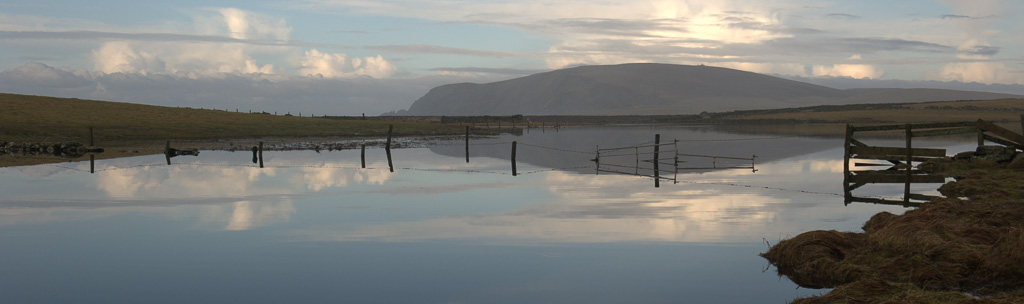
Clearing Clouds Shetland
Sunset Finland 
Evening Ice Baffin Bay
Early Light Oulanka
Balance

In Transit. The Lure of Travel


I probably don't include commuting in this, but I really do get excited at the prospect of going somewhere.


Today, for example, I had the option of sitting at a desk and getting on with some writing (which I should have been doing) or figuring out the pictures I want to show at Artweeks in May (which I also should have been doing), instead I opted to get up at 6 AM to go into London to spend a day pottering around there.

The X90 from Oxford to London (other busses are available) may not qualify as classic travel but it does involve going somewhere.  I'm now sitting in a Starbucks (other coffee shops are available) in the City typing - at one level its indistinguishable from my local Starbucks, but at another level the buzz is different and the overheard conversations in Headington rarely include references to liquidity or over-hedging.

The change from the routine (which is why I excluded commuting earlier) is for me the essence of travel.  When I think about past journeys, or imagine future travels, I find myself concentrating on the novelty.  I recently wrote about the attraction of rail travel - this is the perfect example of continuous novelty, the landscape unfolds around you, there's always something new to see and to try and understand.

So how long do I need to be doing something before it becomes routine?  When I'm planning travels I always get torn between the desire to properly explore somewhere and the lure of moving on to the next place or thing. Is this a recipe for being superficial? Just occasionally I find myself (perhaps against better judgement) having booked into one place for a week. Is there going to be enough to do? Maybe I can do day trips to somewhere else.

Maybe I'm just a tourist at heart.  If I look through my CV maybe it has the same sense of travelling on rather then spending too long doing one thing.  Maybe even my career choice reflects this, I've always looked for new things or new technologies to work with.

But maybe this is all getting too profound for a Friday morning in a coffee shop when I should getting on with some writing.

Journeys of Character

I’ve just put another long-ish European train journey in the diary.  In a few weeks I’ll be heading to the Tyrol in Austria via the Tunnel, Brussels, Frankfurt and Salzburg.  And I’m looking forward to the train days at the beginning and end of the trip almost as much as the mountain days I’ll get in between.  Reflecting on this I’ve been recalling other train journeys over the years.
As a student in Bristol I used to regularly ‘commute’ back to Northern Ireland via train (to Stranraer) and then boat to Larne, and I can still remember the nights spent on slow trains as they chugged their way slowly through the north of England and southern Scotland.  
Forsinard Station - Far North Line

During the summer vacations I used to head in the other direction and use Inter-rail tickets to explore Europe – as far east as Vienna one year, and as far south as Taormina in Sciliy on another occasion.  I still have the mental images (this was in the day before digital photography meant that we snapped and shared everything) of going round Paris by train at night, of waking up in the Swiss mountains and peering out from a claustrophobic six-berth couchettes to see snow-covered peaks, and of rolling slowly into Venice.
Later on I can recall being on the Caledonian sleeper between London and Edinburgh and on the Far North line across Caithness; and further afield on the Shatabdi Express between Delhi and Agra (where we couldn’t see anything through the steamed up double glazed windows) and the slow train between Bangalore and Vellore (in southern India) where we could see everything clearly because there wasn’t any glass in the windows at all.
And later still, touring Scandinavia by train from Stockholm to Oslo and Bergen, and north from Olso to Trondheim and Bodo, and the sleeper from Narvik in northern Norway to Copenhagen in Denmark.   Again (and admittedly these aren’t so long ago) I’ve got vivid memories of the journeys, of the landscapes I was passing through and of the people I met on the journeys and the conversations I had.


Oslo to Bergen in the sunshine

So why are these train memories so vivid? I think it comes down to character – train journeys just have more to make them memorable than do journeys by boat or plane.


Narvik Station

Narvik Station - end of the line.

Over the years (no, to be honest it’s decades) I’ve been on lots of long (and less long) air flights and quite a few boat trips too and in general these just aren’t such vivid memories.   On planes the trips usually just blur together – and on long haul you often only get to see the movies since there seems to be an insistence on darkening the cabins so everyone else can only see the movies. In that case, neither the vehicle nor the journey are very memorable.  There is a difference between a 777 and an A380, but not enough to be memorable once you’re sitting down in your allocated seat! 


Wengen Station, Switzerland
On boats there can be memorable episodes  – and the boats themselves are usually unique  (unlike the planes) - but in general the journeys are usually pretty unmemorable unless the weather decides to intervene with one patch of open sea probably not being too memorably different to the next one. The notable exceptions are coastal voyages like the Hurtigruten up the coast of Norway - am tempted to give this particular voyage honorary 'train journey' status!
On trains, the vehicles themselves are like planes, pretty unmemorable (unless you wind up on one of the restored historic trains) but the journeys themselves are memorable.  
The relatively slow pace and the proximity of the landscape gives you stuff to remember.   The train also doesn’t trap you in your seat – you can wander around and talk to people other than the ones in the allocated seats around you.   


Paris, Gare de Lyon

The slow pace also means that you can see the landscape around you evolve. You pass from urban to rural landscapes, you move between industrial and agricultural and maybe from coast to mountain. You get the chance to understand the geography of a country – travelling at 100 mph makes the transition understandable, travelling at 500 mph makes the transition too fast (even if the clouds keep out of the way).  


Basel, Switzerland


And there are stations!  And stations have place names – I can recall lots of occasions peering out of plane window and trying to figure out which city or bay I’m seeing 30,000 feet below.  Even if the train doesn’t stop as it heads through the station you can usually figure out where you are!
So does this mean I’m always going to travel by train – probably not, but where I can I do.  If there is time I’ll opt for the train rather than the plane for European travel.  For Paris and Brussels it’s pretty much a no brainer (at least if I’m starting in southern England), for other destinations it’s not always quite so clear cut.  

And one day, I’ll get to do real long-haul by train and do Oxford to Vladivostok all by rail.

Swings and Roundabouts - Shetland February 2016

Another trip to Shetland and another spin on the northern weather roulette wheel.

The trip didn’t start well.  We were 400 yards into the 500 mile journey from Oxford to Aberdeen when the phone rang. “We just wanted to check that you’d got the message about the Saturday sailing. It’s very likely to be cancelled”.

Winter sailings between Aberdeen and Shetland are always prone to disruptions. Boats go early. Boats get delayed. Boats get cancelled.  Over the years we’ve been very lucky with the sailings – I can only recall two or three occasions when we’ve been messed about  – but on a short trip to Shetland it is a bit frustrating to ‘lose’ a day.

The tone of the messages weren’t encouraging, there were question marks over the Sunday night sailing too, but we decided to continue on north and see what turned out.

Ythan Estuary, just north of Aberdeen

Our original sailing was indeed cancelled, and we got to spend a day catching up with relatives around Aberdeen before heading to the harbour on Sunday afternoon to check in.  At every stage we were warned that the crossing was going to be a ‘bit bumpy’ – “it should be fine to Orkney, but after that…”.

For those who haven’t braved the Northlink boats – the journey from Aberdeen takes 12 hours by the direct route, and 14 hours if you go via Orkney, and is a really important service for the islands. Even at this time of year, when tourists are thin on the ground, the boats are usually well filled with passengers, cars and freight, and cancellation of a boat means that the next one will be filled to capacity.

As we headed out of Aberdeen harbour on Sunday evening I did feel a touch of sympathy for the many folks sitting around on the chairs and in some cases decks waiting for the weather to worsen. (I should add that although we too were waiting for the weather, we were at least got to do this tucked up in one of the ship's cabins.)  We rolled our way across the Moray Firth en route to Orkney, every now and again a big roll felt like a warning of the seas ahead, particularly of the notorious Fair Isle Channel.  This 25-mile wide passage between Fair Isle and the rest of Shetland is where the North Sea and the North Atlantic get it together – and they don’t agree on much, even on a still summers day this bit of sea is at very least ‘a bit lumpy’,  and during a storm in February…

But somehow the wild weather melted away overnight and we had a smooth journey up past Fair Isle and Sumburgh Head and into Bressay Sound to arrive on Lerwick on a cold sleety Monday morning.

By some fluke of the roulette wheel our arrival on Shetland coincided with the arrival of the longest spell of calm weather that the islands have seen all winter.  The winds swung round to come from the Arctic, and then almost faded away complete – ensuring that the island got several days of still cold weather, and on the rare occasions when the skies weren't clear the only precipitation was in the form of snow.

Snow on the beach, Quendale Bay

There is something magical about wandering on sunlit snow-covered beaches, and we made sure that we spent plenty of time doing just that.

Braving the elements on Scat Ness

Sumburgh Head in the evening sunshine

Quendale Bay

Shetland sheep don't mind the snow

And our luck even held for the ferry crossing back to Aberdeen – the crossing was so smooth at times that it was difficult to remember that the boat was still moving. Would that it was always like that at the other times of the year!

There are a few more pictures from this visit on Flickr.

Local Reserves - Oxford

Guilty as charged.  

I really do spend too much of my Oxford time thinking, planning and plotting ways to spend time elsewhere.  But just occasionally I have a Oxford weekend when I spend time enjoying the bits of Oxford I really like.

I'm not talking about the dreaming spires and gated colleges, although these are what draw most visitors to Oxford.  

I'm talking about the local nature reserves.

Over the weekend I spent time at 'my' two local reserves. One day at the RSPB Otmoor Reserve, and one at the BBOWT C S Lewis Reserve.

RSPB Otmoor has been developed since we've been in Oxford - it's been a major restoration project, returning drained farmland to the reed beds of the past.  The reed beds are now a fantastic wildlife draw - and we visited late in the day to see what I really think is Oxford's best wildlife attraction.

Late in the day at this time of year there are huge gatherings of starling - murmurations - that can completely fill the sky.  As we walked from the car park we saw what looked like mini-murmurations of both golden plover and lapwing, and as we got closer to the reed beds a pair of marsh harrier were swooping low over the reeds too.  

The main attraction, though, are the starlings.  

As the light starts to fade small groups of starlings start to swing low over the reeds looking for somewhere to roost, and as if by magic the groups coalesce, slowly building into huge dark clouds of birds.  Sometimes the birds spread out until they almost seem to disappear, at other times they come together until it seems impossible that something so dark and huge can fly so silently.  If you get really lucky the flock (which might be up to 75,000 individuals) will pick a spot close to the edge of the reed bed, gradually the birds spin down to the roosting spot, the silence becomes the white noise of 150,000 wings beating and then the raucous chatter of the birds jostling for position alongside each other.

Otmoor Murmuration, February 2016

My other entertainment - on the first Sunday of most months - is at the BBOWT C S Lewis nature reserve just outside the Oxford ring-road in Headington.

This reserve, once part of the author C S Lewis' back garden, is a little sanctuary between houses on one side and farmland on the other - it's nice to think that Lewis might have taken inspiration for the Narnia stories from spending time sitting around the filled-in clay pits on the reserve.  The reserve is somewhere I've regularly visited over the years, and a couple of years ago I spotted the signs (goodness knows how many times I must have wandered past them without looking) mentioning the regular volunteer work parties that help maintain the reserve.

It always feels good to spend a few hours chopping, picking or digging on the reserve - and there is real satisfaction from walking up steps that you've helped build or reinstate.

The reserve is another local sanctuary for wildlife - there are muntjac deer around (at least some of the work is about making it difficult for them to eat new growth), there are regularly kingfisher and heron around the pond margin, along with mallard, moorhen and coots and, if your timing is right, bats swooping across the ponds too.  On this visit I was able to spend ages watching a great spotted woodpecker around the tree tops. February is a splendid time to spot woodpecker - they are really active and they don't have so much foliage to hide behind.

C S Lewis Reserve, February 2016

Neither reserve is easy to find, or particularly well sign-posted, but both are worth the effort!  

There are directions to Otmoor on the RSPB website, and to the C S Lewis Reserve on the BBOWT website.  Maybe see you there!

Shetland 365

As some of you might know I've been doing this photo-a-day malarky for rather a long time - I've taken at least one picture each day since late 2004, sometimes on a phone but usually on one of the numerous cameras digital cameras I've contrived to own.

When I look back through the collection of photographs of the day I get reminder of what I've been doing, the projects I've been working on, the mood I've been in - and very often where I've been.

As I was picking through the latest batch of pictures from Shetland, I realised that I've reached the 365 day landmark for pictures taken around the Shetland Islands.

My first picture of the day from Shetland was taken in January 2007 outside the Sumburgh Hotel looking towards the Sumburgh Head Lighthouse.

Sum burgh Head Lighthouse, January 2007
And Number 365 was taken earlier this week (January 2016) on Scat Ness, less than a mile (as the puffin flies) from Number 1.

Waves at Scat Ness, January 2016

In the intervening 9 years I've taken pictures on almost all the Shetland Islands, from Fair Isle in the south to Unst in the North, and from Foula to Whalsay.

South Harbour, Fair Isle, June 2010
Da Noup, Foula, September 2014 
I've taken pictures of the Sumburgh Head Light and Muckle Flugga Lighthouse.

Sumburgh Head Lighthouse, August 2015

Muckle Flugga Light, Unst, June 2007

I've seen lots of boats - of various vintages and in various states of repair.

Europa off Sumburgh Head, July 2011
Solas, Olna Firth, October 2011
Subsea Viking, Lerwick, February 2011

Quendale Shipwreck, January 2007

I've got pictures of beaches covered in snow, and bathed in sunlight.

Quendale Beach, November 2010

St Ninian's Beach, August 2015

I've taken pictures at sunrise (occasionally) and sunset (regularly).

Sumburgh Head sunrise, February 2014

Hestingott sunset, January 2015

I've photographed wild days and calm days.

Scat Ness, April 2014

Scat Ness, January 2012

I've seen the Northern Lights and several Up Helly Aas.

Mirrie Dancers, January 2012
Up Helly Aa, January 2014

I've seen Shetland ponies, Shetland sheep, Shetland seals - and a beached pilot whale.

Whalsay, March 2012
Scat Ness, February 2015
Seal (outside Tesco, Lerwick), October 2013

Quendale Beach, June 2013

I've seen lots of birds - and taken an awful lot of puffin pictures.

Oystercatcher, June 2013
Gannets, May 2010
Arctic Skua, June 2013
Puffin, April 2015
Puffin, June 2013

Since 2010 my pictures of the day have appeared on Blipfoto - and if you want to explore more (without the one-a-day limit) there are lots more pictures on Flickr.