Missing a Muse

Over the last five years I’ve taken at least one photograph every day – when I’ve been travelling there have been lots of different things to photograph. When I’ve been at home I’ve taken pictures at work, in the house and round the garden.

However my fallback has always been to take another picture of the exceptionally photogenic cat that we acquired when we bought our house just over 11 years ago. At that time Solomon was five or six years old (we were never sure which), and had always lived in the house. Solomon finally passed away on Sunday morning, he was probably 17 years old. Here are a few of my favourite pictures from the huge number I’ve taken over the last few years.


Boston & Montreal July 2009

Spent two really good weeks in the US and Canada. First week at the Sakai Conference in Boston, and the second at the IMS GLC Quarterly Meeting in Montreal. These were both really good meetings and were in two of the most european cities in North America (and that's a compliment).

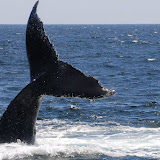
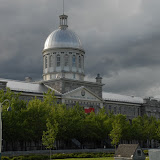
Did manage to find a little bit of time to take a few pictures in/around Boston and Montreal, and went whale-watching during the weekend between the conferences.
Boston July 2009
Whales July 2009
Montreal July 2009

A Whole New Geography July 2009

My blog posts are mostly about places I've been - this one is about places I've only just found out about, and I don't expect to be visting them any time soon.

The in-flight info system on my trans-atlantic Air Canada flight (where I'm sitting typing this - although I'll post it a bit later) tells me more about where I'm flying over than any other in-flight system I can remember using - it feels like I've discovered a whole new layer of geography (apologies to my geography teachers from many years ago if they told me this).

I've just passed over the Porcupine Bank - and I'm now heading towards the Charlie-Gibbs Fracture Zone. Some of the other places I can see on screen are the Immarssuak Seachannel and the Great Meteor Tablemount. I knew there were lots of geographic features under the North Atlantic - I've just never known what any of them were called, and since this is an Air Canada flight, I even know what some of these features are called in French (Rive de Porc-epic, Chenal de Immarssuak and Butte du Grand Meteor).

Suddenly there are an awful lot more place names to think about.

Wimbledon July 2009

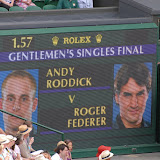
A real bonus - an offer of Centre Court ticket on Men's Final Day very gratefully accepted. The silver cloud from Andy Murray's semi-final loss to Andy Roddick.

Sat in the middle of a 15,000-strong collection of tennis fans and celebs, ranging from Alex Ferguson and Richard Branson to Rod Laver and Bjorn Borg, to watch the marathon match between Roger Federer and Andy Roddick. For the first four sets it really wasn't apparent how Federer was going to complete his 15th Grand Slam title - which must have been worrying for the folks who turned up in the "Federer 15" shirts.

During the fifth set it wasn't clear how either player was going to prevail, other than as a result of the other collapsing from exhaustion. That was pretty much what happening - as Federer won in the 30th game of the final set I couldn't tell if Roddick was reeling from disappointment or exhaustion.

As the final set rolled on a number of the folks around me made apologies and needed to head to the airport to catch flights - I was starting to worry about whether I was going to be able to make my flight on Tuesday morning.

My seat was in an ideal position (in terms of the light) to take photos - a few are below.

Wimbledon July 2009

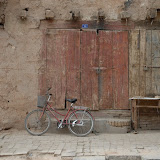
China and Kyrgyzstan, May/June 2009

My second big trip of 2009 – after the coastline and wildlife of The Falkland Islands in February this trip was about as far from the sea as it’s possible to get – Urumqi claims to be the ‘city farthest from the sea in the world’.

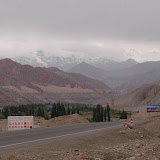
We flew into Beijing, spending just a few hours there before flying back west again to Urumqi – then we took to the road heading west along the northern side of the Takla Makan desert through Korla, Kuqa and Aksu – then south across the desert to Hotan before tracking the south side of the desert to Yarkand and Kashgar. From Kashgar we briefly went south along the Chinese section of the Karakorum Highway, before turning north over the Torugart Pass into Kyrgyzstan. We spent a couple of nights in the mountains staying in yurts before finishing up in Bishkek.

I’ve included links to a selection of the photographs I took on the trip – just click on the images below to see more from each section.


Places
Markets
Takla Makan
KKH
Kyrgyzstan


Highlights

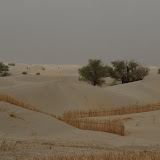
Seeing and crossing the Takla Makan. Peter Fleming did this by horse and camel and took several months, we went across one of new ‘desert highways’ in an air-conditioned bus in about 6 hours. The Takla Makan really does fit all the desert stereotypes.

‘Doing’ at least part of the Karakorum Highway. I bought the KKH guidebook in the early 1990’s when I visited Pakistan’s Northwest Frontier Province – so it was high time I travelled along at least part of the route.

Seeing Kashgar before all the old bits get demolished. The name (for me) conjures up images of camels and a dusty oasis town – there are still a few camels, and it’s still dusty in places, but there are now an awful lot of new buildings too. A lot of building and demolition work going on at the moment involves removing big chunks of the (mainly Uighur) old town – lots of 500 year buildings are being bulldozed as potential earthquake hazards. They can’t be that vulnerable to earthquakes if they’re been there for 500 years.

Learning about Uighur culture. I didn’t know a huge amount about the Uighurs before we booked the trip – it was fascinating to learn about the culture and to meet lots of very friendly and welcoming Uighur people.

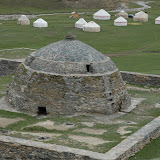
Staying in a Yurt These are the traditional tents used in the high mountains in Central Asia – I’ve now spent two nights sleeping in them. And I remember at least some of the reasons why I retired my tent and promoted myself to places with hot and cold running water.

Having a city-break in Bishkek. OK, it’s a long way from the UK for a city break – but Bishkek is an fantastic place to spend a few days, a mix of Central Asian cultures, Soviet-era architecture and western comforts.

Lowlights

Chinese Breakfasts. I love Chinese food – and almost all the evening meals were either Chinese or (more commonly) Uighur, but I really can’t manage Chinese breakfasts. The group got to the stage of fantasising about muesli with cold milk – and the reaction on discovering that we would get the option of porridge once we crossed the boarder into Kyrgzstan was close to hysteria.

Long-drop toilets. There are some occasions when I feel the need to offer thanks that I have a really awful sense of smell – this holiday provided many such occasions.

My other half has posted some of her thoughts on the trip http://susannareeceknits.blogspot.com/

We did this trip with Explore! – ‘Crossroads of Asia’ – and thanks to all our companions, to Ali and Olga our local guides – and particularly to Craig our Explore! Tour Leader.

Barcelona May 2009

My first IMS trip of the year - and for change on the eastern side of the Atlantic - i.e. not too much travelling time and no jet lag. Excellent meeting and lots of really good Spanish food to accompany it. Despite the full programme did grab a couple of quick outings to take a few pictures.

Barcelona May 2009

Alderney March 2009

Once more onto the Beach. After three weeks back at work it seemed like a good time to head to the coast again – this time not quite so far south. We were repeating a holiday from 1994 – using the same airline and staying in the same hotel. Aurigny still fly the same Britten-Norman Trislanders between Southampton and Alderney – the stretch version of the Islander I used in the Falklands. The Belle Vue Hotel is still run by the same folks that were running it in 1994 too. The island really didn’t feel like it had changed too much since 1994 (but perhaps that’s related to flaws in my memory!). One thing which hadn't changed was the weather, we had splendid weather in April 94 and during our March week this year we had blue skies every day too.

We spent a splendid slow-paced week walking along the coasts and paths of Alderney – saw over 40 different bird species although they weren’t quite as amenable to photography as the Falkland ones.

Alderney March 2009

Only problem now is that I can’t see how to keep up this work:vacation ratio for the rest of the year.

Falkland Islands February 2009

When the snow lies deep and crisp and even across Oxfordshire, it’s a good clue that it’s time to head south. I headed pretty much as far south as I could get on a direct air link from Oxfordshire specifically to the Falkland Islands flying on the MoD air-bridge with a brief stopover in the Ascension Islands. After trudging through deep snow at RAF Brize Norton it was rather pleasant to get to spend a couple of hours sitting in the sun on the ‘Transit Patio’ on Ascension Island before flying on south to Mount Pleasant near Stanley.

The Falkland Islands aren’t (at any time of year) as warm as Ascension but it was a very pleasant 16-18 C in mid February – and on most days the sun shone and the wildlife was amazingly accessible. I never visited anywhere where the birds are so co-operative. Many centuries of seclusion from ground-based predators has made the birds, particularly, easy to see. Back in the North I rather expect any passing snipe to either hide in the undergrowth completely or at very least to disappear into the distance at the slightest provocation – with the magellanic snipe I encountered on Sea Lion Island their idea of an evasive manoeuvre was to jump about 2 feet then carry on feeding.

I spent a total of 11 day in the Falklands – three days on Saunders Island, four days on Sea Lion Island and the rest based in Stanley.

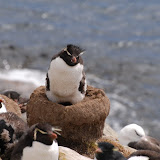
I was fortunate to get to spend my time on Saunders staying at the Cabin at the Neck – a magical place to stay within sight and sound of gentoo, magellanic and king penguin colonies and very close to a rockhopper penguin and black-browed albatross colony. There is also a huge elephant seal colony just a few miles up the coast on the appropriately name Elephant Point. The guide books suggest that the Cabin is going to be pretty primitive, but they’re out of date! These days the Cabin has hot and cold running water, central heating and mains electricity – I’ve lived in worse. I wouldn’t hold out much prospect for Room Service though the nearest other buildings are 10 miles away (which here equates to an hour in a Land-Rover – the vehicle of choice for most people in the Islands).

After Saunders I travelled by FIGAS (Falklands Island Govt Air Service) down to Sea Lion Island on the southern edge of the Falklands. This was the first time I’ve stayed at a hotel with an airstrip but no car park. Sea Lion was major change from Saunders – it feels less remote and rugged but in fact it’s much less disturbed than Saunders Island and still has lots of the tussac grass that once covered most of the Falklands – this provides shelter for lots of smaller birds as well for a few larger mammals such as sea lions (you’d expect that given the name of the island) and elephant seals. Neither of these animals take kindly to being stepped on – and they’re both impressively large with lots of teeth and in the case of the elephant seals spectacularly bad breath.

The bird-watching on Sea Lion is something I’ll remember for a very long time, and the undoubted highlight was lying on the beach just after dawn as the gentoo penguins came to investigate the new arrival on the sand. Having established that I wasn’t good to eat they opted simply to stand watching me watching them – wildlife photography with a wide-angle lens is a whole new experience.

The other real characters on both Saunders and Sea Lion Island are the Striated Caracaras – one of the world’s rarer birds of prey (except on the Falklands). These birds are very confident and incredibly curious (a combination which probably explains their rarity) – they will attempt to carry off a substantial camera bag should the opportunity arise and they are well able to move a heavy bag even if they can’t get off the ground with it. This strength is put to rather better effect (from the caracara’s perspective) at other times by pulling the heads off penguins!

Back in Stanley I had the opportunity to visit a major King penguin colony at Volunteer Beach – this is described as being the most accessible King Penguin colony in the world – which meant that it required a hour on gravel roads, then 90 minutes in a Land-Rover with a very good driver to reach the colony (all assuming you’ve already got to Stanley). I had a wonderful couple of hours at the colony and on the beaches nearby before the crowds descended! My guides (Arlette Bloomfield from Falkland Islands Holiday and Tony Smith from Discovery Falklands) had wisely advised that I needed get to the colony as early as possible before the cruise ship crowds arrived – they were absolutely right. The guidance I’d been given about keeping your distance from the penguins and waiting until they came to you clearly hadn’t sunk in with at least some of the cruise ship passengers. What’s the penalty for harassing a penguin?

The Falkland Islands are now firmly on the cruise ship itinerary – there are economic benefits to the Islands in this but there are downsides too. A big cruise ship can easily double the population of Stanley when it arrives and completely transforms the town – local advice was to either leave town or stay in doors. In addition to this any attempt to get significant numbers of people to a site such as Volunteer Beach is clearly going to be problematic. As we drove to Volunteer Beach it was clear how much damage had been done by 4x4’s to the ground between the road end and the penguin colony. On the day I visited the colony there were well over 40 vehicles parked up near the beach and something like 120 or 130 people milling about amongst the penguins – I can’t see how this is sustainable!

My first trip to the Falklands was a fantastic experience – at one time (many years ago) it was just somewhere in the South Atlantic where we fought a minor war, for me it’s now THE place to go and see, hear and photograph a fantastic range of wildlife. The only real question that remains – on my next trip do I revisit Saunders and Sea Lion Islands or do I make time to get to some of the other 700 islands?

I’ve put together three collections of photos from this trip – a small selection from the vast number of images I took.

The first set will I hope give an impression of what the Falklands Island is like at this time of year (early autumn in the southern hemisphere).

Falkland Islands February 2009


The second set is a collection of penguin pictures from Saunders and Sea Lion Islands and Volunteer Beach.

Falklands JustPenguins February 2009


The third set is my attempt to put together an illustrated bird-list for the trip – there are 37 different species shown here. I saw a few more but they didn’t hang around for long enough to be photographed!

Falkland BirdList February 2009


A word about logistics – I organised this trip through Falkland Island Holidays in Stanley who sorted out all my local flights with FIGAS, the accommodation throughout the trip and even my ‘meal packs’ on Saunders Island. I sorted my MoD airbridge flights with the Falkland Island Government Office in London. On Sea Lion Island I stayed at Sea Lion Lodge, and my chauffeur and guide to get to Volunteer Beach was Tony Smith of Discovery Falklands.

Useful URLs
Falkland Islands Holidays www.falklandislandsholidays.com
Falkland Island Government Office www.falklands.gov.fk
Sea Lion Lodge www.sealionisland.com
Discovery Falkland www.discoveryfalklands.com
Falklands Conservation www.falklandsconservation.com

Snow Event February 2009

I'm not quite sure how much snow (and associated disruption) is required to make a Snow Event - but that's what the media have been calling the weather in the UK over the last few days.

It's made the commute from Oxford to Milton Keynes much more entertaining, and provided more photo opportunities than a typical February week.

Snow Event February 2009

Oxford January 2009

Travelling this month has pretty much been limited to browsing the guide book collection.


However several weeks of enforced inactivity (flu & pneumonia) has given me the chance to reflect on the statement I made in early January last year - "I don't think I'll be doing quite so much travelling in 2008".

So how did I do...

It depends how you measure - in 2008 I "only" clocked up 65,000 airmiles, well down on the 102,000 I did in 2007 (and I only spent 60-something nights away from home, as opposed to over 100 in 2007 - there's a correlation there I'm sure).
On other measures the change isn't quite so clear - 2008 involved 10 trips which meant 39 flights, 2007 11 trips and 41 flights.

So what about my carbon footprint - the 10 trips in 2008 included 6 work trips and 4 leisure ones - the work ones generating 7.3 tonnes of CO2, and the leisure ones 3.2.

My car also made a contribution to global warming last year - about 18,000 miles last year (or about 5.8 tonnes of CO2). About 85% of that was my daily commute.

I'm sure I'll be doing less travelling again this year - plans at the moment only get me to about 20,000 miles. We'll see.

Tromso December 2008

The intention was to try and take some photographs of the Northern Lights - and the few quiet days between Christmas and New Year seemed like a good time to try and do this - and Tromso seemed like a good location. I think it's the most northerly place I can get a direct flight to from south-east of England.

Unfortunately neither the weather (it was Tromso's warmest late December for 25 years - which meant lots of low cloud) nor the aurora (at it's lowest possible activity) co-operated. The Northern Lights will need to remain on the wish list for another year.

It was interesting being that far north (c. 70 degrees) in late December - and seeing that it really doesn't ever get light!

Tromso December 2008

Bristol December 2008

A fantastic cold clear weekend in/around Bristol. A selection of photos taken at Wildfowl and Wetlands Trust at Slimbridge just north of Bristol.

Bristol December 2008

Birmingham November 2008

Another trip to Birmingham - this time amongst the JISC/CETIS twitterati....

Birmingham November 2008

Helsinki November 2008

After a brief stay at home - a long weekend in Helsinki. Two full days in Helsinki plus travel days at each end. Trip booked via Expedia who suggested the Scandic Grand Marina in the harbour area. Fantastic city for a long weekend - probably even better for a longer trip. My travel trip (i) for Helsinki - get a Helsinki Card (covers all local public transport including out to Suomenlinna and more museums than it's possible to visit in a long weekend). Travel trip (ii) - when all the other museums have closed head for Kiasma Museum of Contemporary Art; it opens late even on a Sunday, the building is spectacular and the collection is pretty good too.

Helsinki November 2008

US East Coast, November 2008

My final IMS trip of 2008.

Flew United into/out of Washington-Dulles - spending four days at Penn State with an extra meeting down in Orlando. Penn State brought back lots of memories of my time at Cornell in the mid 80's (particularly the fantastic autumn colours).

East Coast November 2008


It was also fascinating to be in the US (and in two of the 'swing' states) at the time of the US Presidential Election.

From East Coast November 2008

Nepal and Bhutan, September-October 2008

We've spent most of the last three weeks in Nepal and Bhutan (mostly in Bhutan). Bhutan is a fantastic place to visit and (at the risk of encouraging too many people to visit) it's been great to get the chance to visit somewhere with a still limited tourist infrastructure. We flew from London to Kathmandu (via Delhi) with Jet Airways who I last used in 1994 for an internal flight from Bombay - they are my new favourite airline - loads of room in economy class and decent food too.

September in Kathmandu is still definitely monsoon season - but not withstanding that spent time both around Durbar Square and at Bodhnath and Pushupatinath (which made for some interesting photographs), and at the other end of the trip we spent time at Nagarkot and Bhaktapur.

Places Nepal Sep 2008


We flew into Bhutan from Kathmandu - Paro airport is unlike any other international airport I've been to (both in terms of architecture and atmosphere) - it's also almost 7500 feet above sea level and surrounded by high mountains (the Druk Air in-flight magazine reassuringly tells you that the hills aren't as close as they appear!). From Paro we spent the next 10 days or so driving slowly (it's the only way to drive in Bhutan) across to Thimphu, Punakha, Trongsa and Jakar in the Bumthang valley and then back, finishing with the Bhutanese 'must-do' for all tourists, the trek up to Taktshang Goemba (Tiger's Nest).

There really is a dzong, stupa or chorten on pretty much every hilltop.

Places Bhutan Sep 2008


The entire trip gave loads of chances to photograph people - it's not my usual thing, but it gave me the excuse to do this time.

People Bhutan Nepal Sep 2008


I did try to spend a bit of time looking for wildlife (mostly birds) - and a few shots are linked below. I think I can feel a return visit coming on to spend more time looking at wildlife - and going further east to Mongar and Tashigang.

Wildlife Bhutan Nepal Sep 2008


The flights provided some chances to see the high Himalayas amidst the clouds...

WindowSeat Bhutan Nepal Sep 2008


We booked this trip (Bhutan: The Dragon Kingdom) via Cox and Kings in London - and the local guiding was provided by Temple Tiger in Nepal (Shiva Ram), and by Blue Poppy in Bhutan (Sonam and Phup).

Thoroughly engaging trip - it's a really nasty shock to the system to be back in the UK (and the food here is just so mild)... when's the next trip, I'm sure I've still got some blank pages in my passport.

Birmingham September 2008

Another IMS meeting, another city. This time closer to home, at the Lakeside Conference Centre Aston University.

Birmingham September 2008

Spain September 2008

Visit to UNED in Spain (the Spanish equivalent to the Open University). Spent one day in the UNED offices in Madrid and one day at one of UNED study centres in Pontevedra in Galicia. Then grabbed a couple of days to be a tourist in Segovia and Madrid. And contrary to popular opinion it does rain in Spain - this is my second visit to Spain in the last year and I've got wet both times! Barcelona in the rain

Spain September 2008

Suffolk August 2008

Another week on the Suffolk Coast - again staying in one of the National Trust apartments at Dunwich Heath, and spending most of the week in/around the coast and the RSPB reserve at Minsmere. Saw avocets, bittern, marsh harriers, lots of godwits plus common, Sandwich and little terns.

A couple of weeks earlier than our previous visit.

Suffolk August 2008

Silverstone July 2008

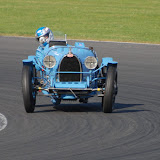
The Silverstone Classic at Silverstone Race Track in Northamptonshire - everything from early Bugatti's through to F1 cars from the 1980's.

Silverstone July 2008