Watching the Vikings - Lerwick Up Helly Aa 2015

Around this time of year, the population of Shetland go distinctly Viking.

To keep themselves amused through the dark post-Christmas months the Shetland tradition is to dress up as Vikings and drag a Viking-style longship through the streets of a town or village and set fire to it in a local park or, if possible, in a local bay.  This tradition, while it might appear to have been going on since the Vikings were first resident on Shetland 900 years ago, was actually started in its current form in the middle of the 19th Century when the entertainment of tar-barrelling (dragging a flaming barrel of tar through the streets) was outlawed.  The Victorian Shetlanders dug back into their collective heritage and transformed their tar-barrelling antics into something that more closely resembles a Viking funeral.  Like many things in this country, it's a Victorian invention that we now assume has just always been the way that things should happen.

The biggest Up Helly Aa is in Lerwick at the end of January,but there are similar, smaller, events at 10 other locations around the island during February and March.  In Lerwick the galley, which has been under construction for the last 8 or 9 months, is marched to the harbourside for photographs then left there while the Jarl Squad, the group responsible for this year’s galley, spend the day visiting schools and hospitals around the town.

Guizer Jarl visiting Shetland Museum
Once darkness falls the real festivities get underway.  A junior Up Helly Aa, where a small galley is burned, sets the tone for the evening and allows the school children of Lerwick to get into the Viking spirit that they'll aspire to in later years.

Junior Galley, Lerwick 2015
For the main event all the street lights in the town are turned off and the galley is marched to the burning site.  The march is led by the Guizer Jarl (the Up Helly Aa chief for the year) and his Jarl Squad, followed by almost 1000 other people in fancy dress formed up as supporting squads.  The squads are all men at the Lerwick Up Helly Aa, although not at the local events.  Every man in the procession will be carrying a flaming torch ready to be thrown into the galley.  A firework marks the start of the procession, and once the procession has marched the streets of Lerwick the squads gather around the galley to cheer the Jarl.  Once he has jumped clear of the galley the torches light up the boat and it’s allowed to burn.

Squads in procession, Up Helly Aa Lerwick 2015
Cheering the Jarl, Up Helly Aa Lerwick 2015
Starting the Burning, Up Helly Aa Lerwick 2015
Burn Underway, Up Helly Aa Lerwick 2015
The squads, with the Jarl Squad as the guests of honour, then spend the next hours visiting the huge number of Halls or parties being held around the town.  This isn't a quick process, and it’s not uncommon to see people wandering home from the Halls well after daybreak on the morning after. In a concession to the festivities, the following day is taken, by most people, as a public holiday.

As one might expect from an event rooted in Viking traditions, Up Helly Aa shows very few concessions to the weather.  I've known one occasion when the morning photocall on the harbour front was moved to a less exposed position, but I don’t think the event has been cancelled at any time since it was restarted after a gap during the Second World War.  The last time the event was altered significantly was 50 years ago when, as a mark of respect for Winston Churchill, it was postponed by a week.

This year the weather was very co-operative.  Heavy showers early in the day cleared away, and by evening it was both dry and (by Shetland standards) windless.  I was in the crowd overlooking the burning site surrounded by lots of visitors seeing Up Helly Aa for the first time.  

Up Helly Aa in 2007 was my first taste of Shetland culture, I don't think I expected to spend quite as much of the next few years around Shetland as I have done. Maybe I should have warned the Up Helly Aa first-timers around me that the place get be rather addictive. 

Or maybe it's better to let them find out for themselves. 

There are more pictures from this years event on my Flickr site.

Dog Days: The 32nd SHCGB Aviemore Rally

Planning an outdoor event in Scotland, in winter, is always a bit of a lottery.  Planning an outdoor event in the Scottish mountains, in winter, is really pushing your luck.  Planning an outdoor event in the Scottish mountains, in winter, that relies on snow? Well that is always going to be a long shot.

Ready to Race - on sledges
The Siberian Husky Club of Great Britain do this every year in late January – when they run their Snow Rally in the Glenmore Forest near Aviemore. This is the one event in their annual calendar when they really do hope to get a chance to let their dogs run on snow, pulling sledges, rather than the three-wheeled rigs that they pull at every other event of the year.

And this year it almost worked perfectly.

The event had been anticipated by the weather gods.  A few days before the event the Cairngorms had been covered by a heavy dump of snow, and after that the temperatures dropped dramatically, down to about –9C.  This left some beautiful tracks around both the Glenmore and Rothiemurchus estates  - the track surfaces were good, the trees decorated in Christmas-card style and the sun was shining.
Forest tracks - Rothiemurchus 
Christmas-ready - Rothiemurchus

Tracks - Glenmore
On practice day there was no question – teams were running on sledges, and the dogs all looked delighted.  Siberian Huskies (and Alaskan Malamutes, Samoyeds, Greenland Dogs and Canadian Eskimo Dogs) were all bred for life running in the snow and it shows.  The weather on the practice day also made for great photographs too.

Practice Day - running with sledges
Then it all started to warm up, overnight the temperatures rose and by Saturday morning the beautiful tracks had all gone a bit slushy.  On the high parts of the circuit I suspect that the conditions would still have been better on sledges, but on some of the lower parts the snow had gone completely so the organisers had no option other than to order a switch to the wheeled rigs.  This didn’t dampen the canine enthusiasm any.


The following evening, the temperatures continued to wander up and down around freezing but there was't any fresh snow to replenish the tracks.  The net effect was to leave even more patches bare, and to also transform the remaining snow on the tracks into ice. The worst combination.  The ice patches were too slippery for the wheeled rigs, and the bare patches meant that sledges couldn’t be used.  This was one of the rare occasions where the organisers were left with no option other than to cancel the days racing.
Not so happy - waiting for the journey home
The Aviemore Rally is a fantastic opportunity to see dogs running, hopefully, in the snow.  I've been to the event before, and I certainly hope to be back again next year.

There are more pictures from this years event on my Flickr site.


No Polar Tourists?

There’s an interesting story on the BBC website today which poses the question “Should tourists be banned from Antarctica?”.

The conclusion, by someone who has been there recently, is a cautious yes, and this is supported by the FCO's head of polar regions Jane Rumble who endorses responsible tourism to Antarctica, and adds the encouragement to “do what you can to preserve it”.

I, too, am in favour of responsible tourism to Antarctica, and I'm very aware that unless people know about the polar regions they aren't likely to put preserving them high on their priority list,  but I do have some reservations about how Antarctic tourism is evolving.

I worry about the growth of activity tourism.
 There is a difference between the impact of a
tourist spending a couple of hours ashore taking photographs in a tightly controlled area near a landing beach and the impact of one who is camping or engaging in the various adventure activities often offered.  As far as I am aware the activities offered by the current operators are generally well managed, but the market pressures do have a tendency to encourage operators to offer more and more 'extreme' options each year.

I'm concerned about Antarctica becoming just another notch on the luxury tourist belt – we've done the Safari in Africa, and the Barrier Reef and the Amazon, where next?  One aspect of this market is the gradual move to both bigger and more luxurious boats which provide big cruise ship style comforts but do result in significantly higher price tags.  I also have major reservations about the big boats that have started to head further south adding South Georgia and the Antarctic onto longer South American cruise itineraries.  So far the only problems with tourist boats have been with small boats where it has been feasible to provide rescue by other small boats in the area.  At some point a 500-berth (or bigger) ship will have a problem, and providing assistance to the 700 (or more) people on a boat of that size is going to be problematic.

Having voiced concerns about boats around Antarctica, I also need to voice concerns about the emergence of fly-cruises which allows visitors to cross the Drake Passage without getting their feet (or anything else) wet. There must be more environmental impact in flying down to the Antarctic Peninsula from Punta Arenas or Ushuaia before joining the boat that’s waiting for you in the South Shetland Islands.

Maybe I'm really just a bit of a polar puritan.  I look for the opportunities to see the wildlife and the landscapes (and ice-scapes), and my criteria for picking a polar trip is based on the time exposed to the wildlife and landscapes.  Provided I get a hot meal every now and again (and somewhere to recharge camera batteries) I'm certainly not looking for fine dining or extensive leisure facilities.

And deep down I think you really should arrive in Antarctica by sea, flying over the Drake Passage rather than experiencing what it can throw at you really is cheating.

Pictures from 2014

Pictures of the Month 2014

January - Sled Dog Racing, Aviemore
February - Rainbows, Otmoor
March  - South End, Shetland
April - Forth Bridge, Edinburgh
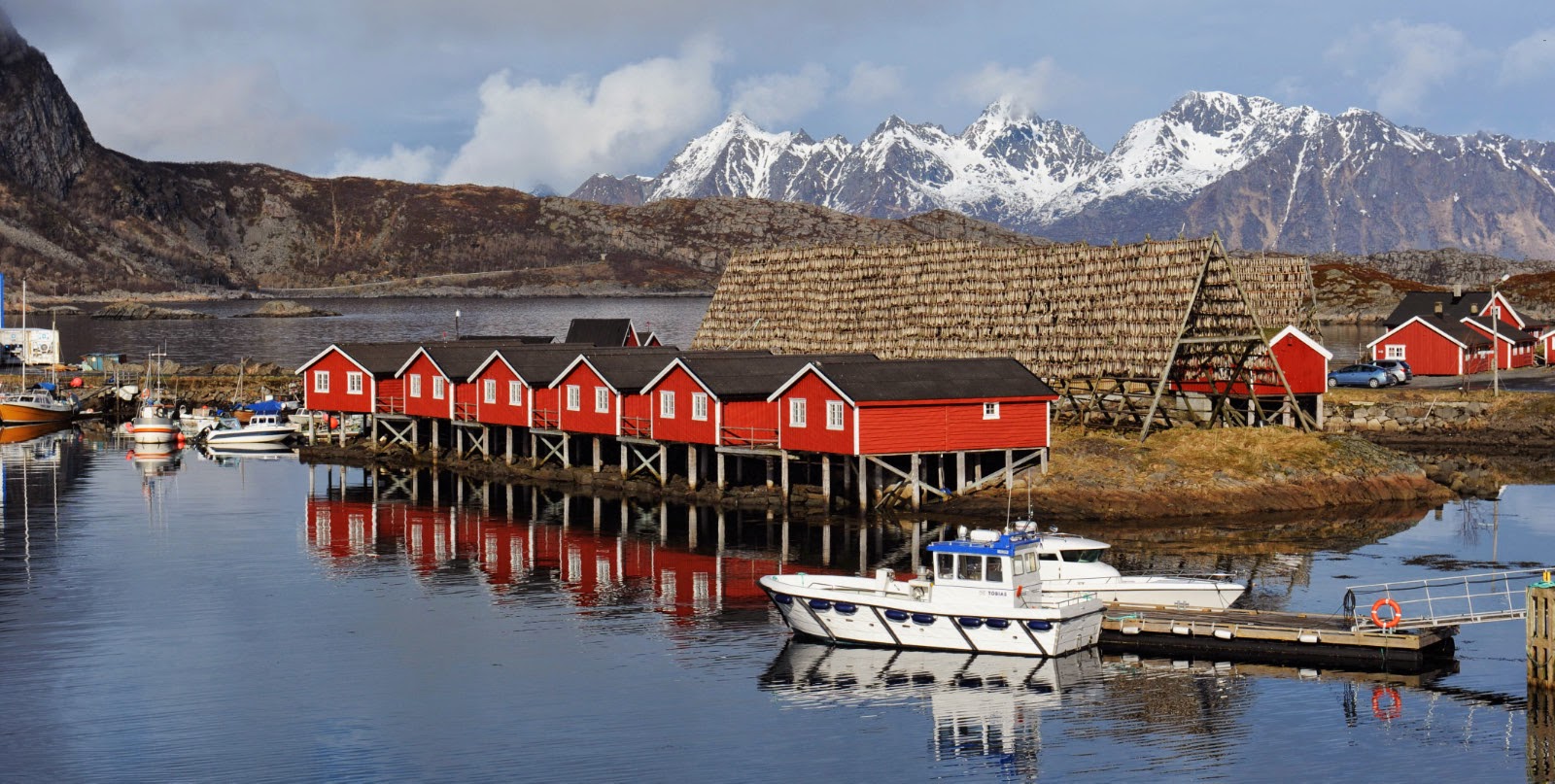
May - Reine, Lofoten Islands
June - Morecambe in Morecambe
July - Calton Hill, Edinburgh
August - Eilean Donan Castle, Scotland
September - Coniston Water, Lake District
October - C S Lewis Reserve, Oxford
November - Thames, Oxfordshire
December - Ten Years of Photo of the Day

Can also be seen on Flickr.


Hello 2015

I think it’s probably human nature to think in terms of a yearly cycle.  And I just can’t help using the turn of the year as a review point when I look back over the past twelve months and give a bit of thought to the next twelve.

I've given up with the New Year’s Resolution malarkey but it’s still interesting to speculate on the new and continuing projects I’d like to progress in 2015.

This time last year I came up with 7 targets for 2014. How did these pan out?

  • The Islands theme. I've done OK on this theme. Quite a lot of time spent on little islands, including some I’d not been to before, but there are lots more islands still to go.  (I’ll give myself a B+ here)

Foula, September 2014

  • Lofoten Islands. Sorted a summertime visit to Lofoten, spending time both back in Svolvaer and in A-i-Lofoten.  (A- here) 

Svolvaer, May 2014

  • St Kilda. Been there. Now want a return visit! (B+ again)

St Kilda, August 2012

  • Oxford Artweeks.  Did that, thoroughly enjoyed both summer and winter parts, and have signed up to do it again in 2015. (A)

ArtWeeks, November 2014

  • Photo competitions.  Haven’t entered enough. Could do better. (Failed on this one, D)
  • More time on Shetland. Have spent several longer blocks of time on Shetland, but it’s never enough. (B)

Shetland, September 2014

  • 365 more images on Blipfoto. Have now kept up the photo-a-day practice for over ten years. (A)

Oxford, December 2014

High points from the last twelve months included the lovely (and moving) experience of seeing my other half being ordained as an Interfaith Minister, the traumatic (and slow moving) experience of starting running again and the rediscovery of how lovely the Lake District is. And I've started volunteering, at least occasionally, with BBOWT.

One Spirit Interfaith Ordination, July 2014
Silver Joggers, Bury Knowle Park, Oxford, November 2014
Coniston Water, September 2014
BBOWT Work-party at C.S. Lewis Reserve, Oxford, October 2014

I've also become increasingly keen about finding ways to use my photography (and enthusiasm) to push the agendas behind habit restoration and rewilding.  I've been able to spend quite a lot of time this year in some of the more remote parts of the UK, and I want to see some of these returned to how they should be, not their current beaten-into-submission state.

I've done much more talking and writing about my pictures than I was doing before – and am enjoying doing both. I've sold a reasonable number of pictures over the last twelve months via the North South Images website, and started to get my Camera School project off the ground too.  And I've done a bit of educational technology consultancy too.

Targets for 2015

We'll start by carrying over a few things from the previous list.
  • Taking part in Oxford Artweeks - put that in your diary for 9-17th May 2015, and 14-15th November 2015
  • Entering more photographic competitions
  • Carrying on with my Photo-a-Day project for another 365 days
  • Spending more time on Shetland

And some things that weren't there last year
  • Keep on running. I did the Park Run in Oxford twice in December 2014 - plenty of scope for improving my PB.
  • Keep on talking. Do more talks about life and wildlife in cold remote places.
  • Finish the Writing. I've got lots of longer writing projects partially done. At least some need finishing.
  • Big Ice.  See some more big ice - in either North or South.  This feels like an unfinished project.

That's a long enough list.  I'll be reporting back both here and via my daily photo diary on Blipfoto,

Shetland December 2014

After rather too long a gap, I did finally get to spend a little bit of time taking pictures on Shetland before the Christmas holidays kicked in.

As you might expect at this time of year Shetland provided every sort of weather.

From snow at the start of the week, just enough to make the wee roads slithery.

Snow at Hays Dock, Lerwick

Big waves mid-week, big enough to make the bays look interesting but not enough to scare the planes.

Sunshine and Waves at Scat Ness
Waves breaking over Runway 09 at Sumburgh Airport
And lots of heavy rain showers later in the week, with the added bonus of lots of rainbows (even some doubles)

Waves and Rainbows - Quendale Bay
Shetland also provided not-much in the way of daylight.  In late December, on Shetland, sunrise is a bit after 9:00 AM, and sunset a bit before 3:00 PM.  Fitting in a morning walk and an afternoon walk (with lunch in between) becomes a bit of a challenge particularly if you’re trying to avoid wandering back along the beach in the afternoon darkness.  One of the bonuses is that in lighting terms (at least between 9 and 3, between the showers), it's always the 'golden hour', the sun never gets far above the horizon so the sunlight is always at a lovely low angle.

Low sunlight on Ocean Endeavour - Victoria Pier, Lerwick
The weather did do a bit to add some variety to the travel schedules.  On a couple of days the north-bound boat from Aberdeen only made it as far as Orkney, and some big thunderstorms (combined with snow – makes the lightning flashes even more dramatic) made landings at Sumburgh Airport a little bit entertaining.  My arriving plane did the fairly normal for Shetland (but still slightly unsettling) sideways approach down the runway, before turning straight just before touchdown to the accompaniment of lightning flashes.  Another plane coming in from Aberdeen was hit by lighting as it approached Sumburgh, and opted to turn round and head back to Aberdeen rather than trying again. This year at least the disruption to the boats wasn’t enough to force the supermarkets to charter cargo flights to provide emergency sprouts and turkeys for the folks of Shetland as has happened in the past.

The one climate-enabled spectacle that didn't put in an appearance while I was there were the Merrie Dancers (the Northern Lights). They did appear 24 hours after I left – maybe I’ll get to see them next month.

There are a few more pictures from this visit to Shetland on Flickr.

What's the Back Story?

One of the talks I give is a 'lottery lecture'.  I ask members of the audience to pick a tag from a bag which corresponds to one of the photographs I have with me.  I then spend a few minutes talking about the image they have picked, and particularly telling the back story of the picture.  In some cases it's about the subject of the picture, or what was involved in taking the picture or getting to the location. In other cases it's about the geography or history of the place, or (given that many of my images are from cold remote places) how those places are changing as the climate changes.

On lots of occasions these back stories are what people seem to take away from the presentation - and the stories do regularly provoke interesting questions and discussions.  One of the reasons that I am so enthusiastic about this sort of presentation is probably related to the fact that the backstory is what I look for when I'm looking at someone else's pictures.

Over the last few days I've had the chance to look at two parts of a fantastic exhibition of the work of Don McCullin, best known as a war photographer.  Before I go any further, I'm absolutely not putting myself anywhere near this league of photographer.  However, as I looked around the images on show in Fallen, I did start to wonder what the back story was to some of the images, and particularly some of the people in the images that McCullin had taken. I found it nearly impossible not to try and speculate about what had happened to the shell-shocked US soldiers in Vietnam or to the Cypriot villagers in the 1960s or (closer to home) the stone-throwing kids in Londonderry/Derry in the early 1970s.   Perhaps that's the power of a really strong people-picture.  It makes you think about what happened to the people both before and after the moment when the shutter was pressed.

If you happen to be on Shetland anytime before 22 February, do find time to get to either the Museum in Lerwick and/or the Bonhoga Gallery at Weisdale where the two parts of the exhibition Fallen are on show.  There's a huge amount to think about.

At the moment I'm trying capture the backstories that go with some of the images I've taken over the last five years. It won't be finished for this Christmas, but it might make it into print for next year.

If you'd like to invite me to give one of my 'Lottery Lectures', do get in touch ross@northsouthimages.co.uk

Still too Soon?

Oxford - 19th December a few years ago.
So when does Christmas start?

The retailers seem to think it’s shortly after the August Bank Holiday.  In any case, the shops and streets are dripping with Festival Cheer™ from far too early, and I have serious doubts about the ability of even the most heavily genetically-modified pine tree to retain its needles from 1st of December until the 25th.

I know  (my other half has told me)  that throughout December it’s really Advent, which is why we have those calendars with 24 little fragments of chocolate, and that Christmas really starts on the 25th. And I do thoroughly approve of the Danish tradition of putting up the Christmas tree on the 24th and celebrating from then.

However, the reality is that in the UK if you try and wait until the 24th to do the Christmas stuff, there won’t be a tree, mince pie or Brussels sprout  to be found anywhere.  So my suggestion is that we adopt another Scandinavian model  - the Icelandic one – and salute the arrival of the Yule Lads as our Heralds of Christmas.  They start to turn up on 12th December, which seems like a decent compromise.

Until then you can take your Christmas cards and Festive Cheer™ - and stick them up a chimney somewhere.


Humbug. But only until the 12th when I'll be happy to welcome Stekkjarstaur and his pals.

Christmas Artweeks 2014

I'm going to be taking part in Oxfordshire Artweeks next weekend. In November.  This might come as a surprise to you!

As I've been handing out flyers about the event this week I've been surprised that so many people didn't know about Christmas Artweeks.

This is a chance to revisit the artists you went to see in May, and to see what new stuff they've produced since the summer.  Or if you didn't quite get round to doing Artweeks this year, it's a chance to see what the fuss is all about.  And you might well be able to pick up some really special Christmas presents that you just aren't going to be able to find in the supermarkets!

Christmas Artweeks is a one-weekend-only event - this year on the 22nd and 23rd of November.

I'll be open from midday to 6pm on both the Saturday and Sunday, and I'll be showing new pictures from remote Scottish islands, and a selection of images of penguins and polar bears.  As well as mounted and framed prints (ideal Christmas gifts!), I'll also have lots of cards, calendars, mugs, keyrings and notebooks on sale.

I'm at 34 Stile Road, Headington, Oxford, OX3 8AQ.   Hope to see you at the weekend.

There is more information about other Headington artists on the Headington Artweeks website, and about all the Oxfordshire artists involved in Christmas Artweeks on the main Artweeks website.


North South Images Newsletter October 2014

The latest issue of the North South Images newsletter is now available.

This edition has images from my tour of remote Scottish islands during the late summer and early autumn.

This trip allowed me to build on a couple of trips to Fair Isle in the past, and let me spend time on both St Kilda and Foula.  These are two of the most remote islands in the United Kingdom. St Kilda hasn't had a 'real' population since 1930 - it now has an itinerant collection of National Trust for Scotland staff and volunteers and a small military detachment who get to monitor a little radar station.

Foula still has a regular, crofting, population which manages to keep going despite having to fetch all their shopping from the Shetland mainland 20-something miles across a pretty rough stretch of sea.

There is more about the visits to both St Kilda and to Foula elsewhere on the blog.

There is also a small selection of new images from Shetland - the early autumn was a great time for Shetland sunsets!

The newsletter is available either on Slideshare or as a PDF file.

The previous newsletters (from February and July 2014) are also still available

February 2014 - Slideshare - PDF
July 2014 - Slideshare - PDF

If you are interested in hearing more about people, places and wildlife in the far North or the far South, do get in touch.  I'm always happy to talk (and enthuse) about cold places in front of an audience, for more information contact me at ross@northsouthimages.co.uk

Alternatively, if you want to improve your own photography, I'd be very happy to provide assistance.  I run both 1:1 and small group photography sessions in/around Oxfordshire, or elsewhere by arrangement.

Again contact me on ross@northsouthimages.co.uk for more details.