The Photo-a-Day Habit

I got a little bit of local fame (or infamy) last week. 

Junior Photographer, c.1971
Completing a year of sharing my daily photo habit on Blipfoto got me a little item in the Oxford Journal.  I did a short telephone interview with someone from the paper and an article based on the interview appeared plus a photo from my occasional 'Cafés of Headington' series and a self-portrait I took in Greenland trip a few years ago.  The article was mostly right - although I think I might have over-estimated how early I got my first camera.  The earliest picture I've been able to find where I have a camera round my neck was taken in the Alps in summer 1971, when I was 10.  There's no point lying about my age any more, having been outed in the Oxford Journal as a '50-year old Open University IT manager'.  I decided not to complicate things by getting into explaining what an educational technologist was during the interview.

Cafes of Headington. April 2011: Picture # 2298

The newspaper hook was the fact that I'd taken a picture every day for a year, although for me this was just a continuation of a much longer standing habit.  I've been taking pictures regularly since the late 1990's, and I've documented holidays and trips with a camera for a lot longer than this.  The move to digital in 2004 made me start to think a bit more about my photography, and the ability to experiment more and see the results immediately encouraged me to resolve to take a picture each day during 2005.  Having made that resolution just before Christmas in 2004 there didn't seem to be any good reason to wait until the first of January to get started, so my photo-a-day sequence actually started on 24th December 2004, with a picture of an art installation taken from my office window at the Open University.  I also set up this blog to share the images - in reality I don't think anyone else was watching, but the purpose was to provide an incentive for me not to break the sequence.  

Modern Art - Open University: Picture #1
Once I got to the end of 2005, a year which had turned out to include a number of interesting trips both in the UK and further afield, the process of looking for a picture to say something about the day had become a habit, and I just kept going.

Persepolis, Iran, November 2005: Picture # 338
Although I was still taking pictures every day I stopped posting a daily image and this blog changed into my place for reporting on the many trips I was making and a place where I provided links to my Flickr and Picasa accounts.  This was my routine until late July last year when I was encouraged to post my daily picture onto Blipfoto.  28th July 2010 was my first day on blip, and also my 2043rd photo-of-the-day.

Riverside, Milton Keynes, July 2010 : Picture # 2043

Reaping & Sowing, Oxford, August 2011: Picture # 2424
Two of the questions that the Oxford Journal asked were essentially “What do you look for in the daily photograph?” and “Will you stop?” 

I don’t think I’ve got an answer to the second question – I certainly can’t see a reason for stopping, although I’m sure something will happen one day to break my continuous run.  The first question is more challenging.  If I’m travelling or doing something unusual, I’ll always have a camera with me – on these occasions my problem is usually deciding which of the many images to post. On a more routine day, I might well need to go hunting for a blip.  Sometimes I’ll have an idea that I want to seek out, on other days serendity will offer me something to blip.  The urge to photograph boats one work-day lunchtime, resulted in my discovering that there was actually a marina (on the canal) just a few minutes from office.  If I’m in Oxford (which was the angle that the Oxford Journal wanted) I’ll try to find a blip that says something about Oxford, perhaps people punting on the river or the gate to an Oxford college. Inevitably, the images say something about me and what I’m thinking as well as where I am.  I’ve taken ‘pictures-of-the-day’ on every continent except Africa (an oversight that I must rectify).  I’ve taken pictures when I’ve been happy and miserable – and even when I was laid up with pneumonia.

Oxford, August 2005: Picture # 248
Falkland Islands, February 2009: Picture # 1515
Greenland, August 2007: Picture # 956
My photo-a-day habit is a well entrenched one – over the next few weeks I’ll keep the Oxford, Milton Keynes and Shetland images coming, and after that there should be a few months of rather further afield images to add to the blip collection.
Shetland, October 2010: Picture # 2112
Update: The article in the Oxford Journal managed to find its way to the attention of the OU Communications team - and they (with a little input from me) produced this item on the Open University Platform.

Another Update: 28th October 2011. Picture # 2500

Quendale Beach, Shetland, October 2011: Picture # 2500

Tall Ships and Puffins - Shetland July 2011

If you want to see puffins at close quarters, it doesn’t get much better than Sumburgh Head.  I’m not sure if you can actually see puffins without getting out of the car – but it’s pretty close, and it’s only a few steps from the car park to the puffin-covered cliffs.   July is also a really good time to see the puffins en-masse.  In good years there will be lot of feeding of youngsters obvious, just ahead of fledging time.  However, this year hasn’t been a good year for lots of the seabirds and there has been very little evidence of the puffins bringing in sand-eels for youngsters, for which read there aren’t many pufflings around – and the attentions of the bonxies and the hoodies will have taken a toll of the limited number of chicks around.  This means that lots of the adult puffins are just hanging around on the cliffs waiting for the signal to head out to sea for the winter.  The guillemot cliffs, usually alive with noise, are already bare – the poor breeding season leaving the birds no reason to stay around. 


This July there was another reason for heading to Shetland – the return of the Tall Ships. These magnificent boats last put in an appearance in Shetland in 1999, so their reappearance was long overdue. The harbour at Lerwick is pretty picturesque at any time, but adding in the Napoleonic-era sight of masts and spars towering over the waterfront buildings really does make it special. There were almost 60 official Tall Ships in town, including 15 of the huge Class A boats (for those of the right age – think, Onedin Line), and lots more tourist yachts in town to see the festivities.  During the few days leading up to the events in Lerwick, the ships were gradually turning up around the Shetland Islands – their progress being more than slightly impeded by the fierce (and unseasonal) northerly winds coming straight down from the Arctic. I'm not sure that the helicopter escort provided to the Europa was needed, but it did add extra drama to the images. 


There have always been close links between Shetland and Norway. There is a still controversial story about Shetland being handed over from Norway to Scotland in lieu dowry at the time of a Royal wedding in the 15th Century. Over the years there have always been important trading links between Shetland and Norway.  One of the reminders of this close link is the Shetland Bus memorial in Scalloway, commemorating the Second World War communications link into the Norwegian Resistance movement. The Tall Ships provides another reminder of close relationship between Shetland and Norway. Almost a third of the bigger boats were flying Norwegians flags, and these mostly crewed by teenagers. The breaking news from Oslo on the Friday cast a shadow over the event – every boat in harbour had flags at half-mast, and the Norwegian boats suspended their ‘open-ship’ tours on the Saturday.


No Wrong Weather at the South End - Shetland June 2011

A week on Shetland can, at any time of the year, offer a huge variety of weather, and at the height of summer there is certainly plenty of daylight to enjoy the meteorological variety. The trick, if that's the right word, is to choose your entertainment to match the weather.

If the weather is bright and sunny there is no better entertainment than visiting Sumburgh Head. The road up to the RSPB Reserve and Sumburgh lighthouse is lovely, but you get an even better view of the sea and the Head by walking slowly up from the Sumburgh Hotel (an ideal place for a lunch stop) and Jarlshof. At this time of year you'll certainly get to see eider, oystercatcher, terns, wheatears, various gulls and maybe a bronxie (great skua) or an arctic skua, as well as gannets heading to or from Noss. On the cliffs as you get up to the Head you'll see guillemots, razorbills, shags and puffins. Out to sea you'll also see rafts of guillemots and puffins taking a break from nest duty. The downside of the bright sunny weather is that as well as being good for us, it's also good for puffins. So while there may be a few puffins sitting around the cliffs, most will either be sitting on eggs in their burrows, or will be out at sea.

If you come back on a wild and blustery day (which could very well be the next day), it may not be quite so pleasant to wander up the coastal path but your reward is likely to be lots more puffins. If the seas are rough, the fishing is much less easy, so if there aren't yet young demanding to be fed, the puffins not lurking in burrows will be sitting around the cliff tops very willing to pose for photographs.

But what if it rains? When the rains falls and the wind blows it's not very pleasant to wander around at Sumburgh Head. On days like this, the ideal antidote is to find one of the local voes and sit and wait for otters to appear. Wet, windy weather may not be ideal for us to be outside, but (provided you can find somewhere up-wind) it's perfect weather for otters and for otter spotters.

We had all these sorts of weather in a few days around the south end - and got to see puffins and otters, and to get sun-burnt too.

Update:  There are more pictures on Flickr and on Picasa

Another update: A rather scrappy audioboo version of the post - still working on this aspect!

South end of Shetland (mp3)

More fun by Ferry, May 2011

We’re at the start of National Ferry Fortnight. This is a campaign by the UK’s ferry operators to encourage us to go places by boat rather than just jumping onto planes.

This seems really relevant to us. Not only are we planning to go north to Shetland by NorthLink ferry in the next few days, but we’ve also decided to abandon our plans for a long haul trip in October and to instead spend some time using the many Caledonian MacBrayne ferries that frequent the west and north of Scotland.


There is something about going places by ferry that just feels more civilised than most forms of air travel – the pace of life is slower, there’s space to walk around (and to take pictures), you can eat and drink if and when you want to, and on overnight crossings it’s possible lie down in a real bed without needing to re-mortgage the house.


Ferries were always part of my younger travelling life.   I can recall many crossings of the North Channel between Larne and Stranraer, and also lots of times when summer holidays involved ferry routes.  Rosslare to Le Havre was always my favourite way of getting from Ireland to France, and some of the strongest memories involved using the Caledonian Macbrayne ferries to go to the Outer Hebrides.   I can even recall quite a few Dover to Calais crossings when I was student – this was the direct route for weekends in Paris before the Channel tunnel was an option.


Once my student days had passed I seemed to rather abandon ferries and go pretty much everywhere by air. I can remember the excitement when we booked CalMac to go to Islay about ten years ago. I also realised that although many things had changed in the UK over the almost 20 years since my last long ferry crossing, the meals on the CalMac ferry were still pretty much the same. Mind you it is hard to improve on fish and chips or scotch pies.

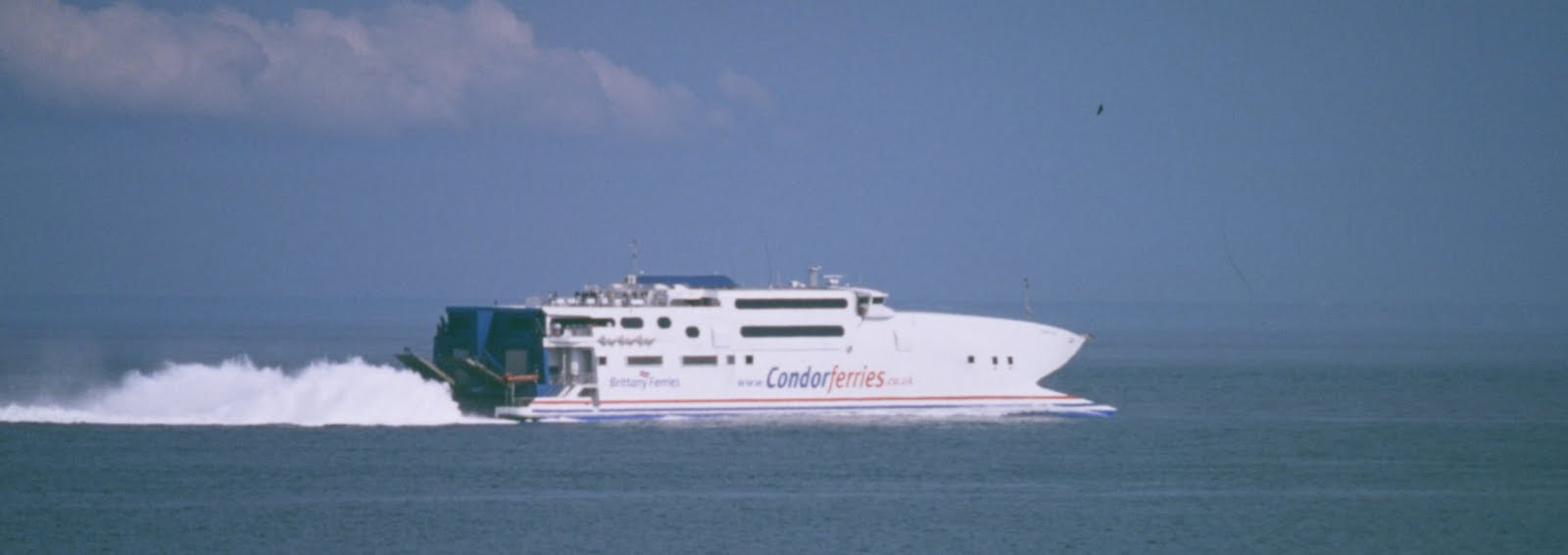
Over the last ten years I’ve left the British mainland by ferry heading in lots of directions – I’ve been across the North Sea to Norway and to Denmark, I’ve gone south from Weymouth to the Channel Islands and I’ve revisited the Outer Hebrides and gone north from Aberdeen to Shetland several times. In the case of the Shetland route lots of time in the last twelve months.


Getting to Shetland by the Northlink ferry takes much longer than the air route (even on FlyBe’s bad days), but it always feels like a more satisfying (and authentic) way to make the journey. No matter how bumpy the crossing has been it’s always good to see and on rough crossings feel the ferry come into Bressay Sound as it approaches Lerwick.

from MV Clansman in the Sound of MullThis autumn I’ll be heading up to Shetland, but I’m planning to do this by one of the more indirect and ferry intensive routes. Rather than heading to Aberdeen and getting the direct ferry from there we’re intending to head to Oban on the west coast of Scotland then use CalMac to go North via the Hebrides.


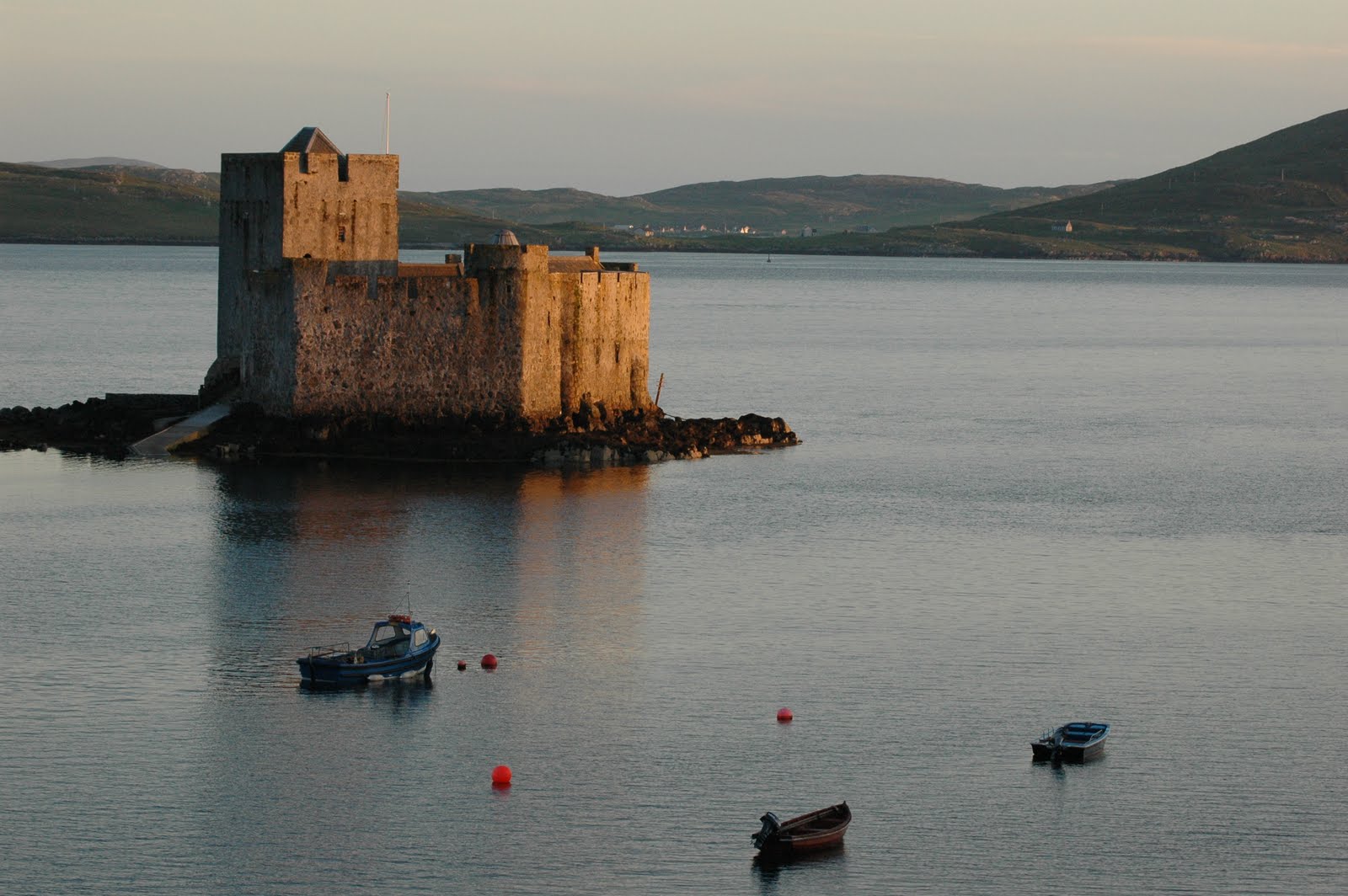
The first leg of the trip goes through the Sound of Mull then across to Coll and Tiree in the Inner Hebrides. After a few days there we head north west across the romantically named Sea of the Hebrides to Barra on the southern tip of the Outer Hebrides.


 From there slowly northwards to South Uist, Benbecula, North Uist, Harris and finally Lewis. When I first visiting the Outer Hebrides in 1975 that collection of islands would have involved lots of ferry crossings, now-a-days the Uists and Benbecula have been causewayed together so getting from Barra to Stornoway on Lewis only needs two short ferry crossings.


From Stornoway, the next step is eastwards across the Minch with CalMac to Ullapool then across Caithness and Sutherland to Gills Bay for the short ferry crossing to Orkney. Then finally picking up the Northlink Ferry for the overnight crossing into Lerwick.

As I've been putting these words and images together, I've realised how many of the routes I've mentioned have either changed or stopped operating altogether .  The ferry from Stranraer now goes into Belfast rather than Larne (although there is still a Cairnryan to Larne), the Rosslare ferry now goes to Cherbourg and the Newcastle to Bergen service I used to get to Norway has stopped altogether. And one of the services I've always wanted to use - from Shetland to the Faroe Islands - has disappeared before I got a chance to use it.

In places were the services receive a life-line subsidy the services do continue to run, but in other places where market forces dominate the routes are more than slightly vulnerable. I hope that National Ferry Fortnight does succeed in encouraging more passengers, I'd be really sad to see any more services disappear.


Leeds April 2011

Never look a gift trip in the mouth.

It’s all about overcoming prejudice.  When it was suggested that I might like to spend a day in Leeds, my first reaction was close to “Great. What’s second prize? Two days in Leeds?”.

I was wrong.  My two days in Leeds this month were entertaining, the weather was warm and sunny, the hotel was good and the food was excellent too.  Can’t think where I got my anti-Leeds (or is it anti-Yorkshire) prejudice from.

I’ve been to Leeds, usually to visit the University, quite a few times over the years, but I think the most recent visit was close to 10 years ago.  My overwhelming recollection is Bleak.  I remember the place being cold and usually wet.  It’s also an inconveniently long way North.  I should clarify that things only qualify as being an inconveniently long way North – in my book – if they involve being in the North of England; Scotland, Shetland, Norway, Iceland fall in a different category.  I’ve never claimed consistency on this point. 

I wound up staying on the 14th floor of the Park Plaza in the centre of Leeds – with a splendid view of the railway station, and far enough above it to not notice any noise – and spent most of my two days around the University.  I was trying to find ways to describe the University campus, and I’m pretty sure I recognise bits of it from late 60’s sci-fi films or TV programmes.  There are huge concrete buildings, fountains, elevated walkways linking the huge buildings and, during the Easter vacation, very few people.  All it was missing was the cast of Doctor Who (I’m picturing the folks from UNIT and Jon Pertwee) .  In the sunlight and with blue skies the campus looks really dramatic – but I bet it’s bleak when there’s a strong north-easterly blowing with some horizontal rain to accompany it.

Leeds April 2011


I guess my conclusion is not to judge places based on distant memories.  It’s always worth revisiting places, particularly if you can arrange to revisit them when it’s sunny.  Next time a trip to Yorkshire gets suggested I’ll ask about the third prize – maybe I’ll get three days in Leeds that time.


Being a tourist

One of the challenges of being at home is that you don't behave like a tourist.

At home there are regular pressures around things like doing the garden, sorting the laundry, doing the shopping and (heaven forbid) going to work. It's no wonder that being on holiday is more fun - there's time to do things like go to museums, sit and watch the birdlife, take photographs, sit in a coffee shop slowly finishing a cappuccino and even (just occasionally) doing nothing. This second set of things are just harder to fit in when I'm at home.

I think it's time to try and get the balance right, or at least better, even when I am at home. I've been taking at least one photo a day for a long time, the last day when I didn't take a picture was 23rd December 2004, but I think there needs to be a bit more than this.

So today is a landmark. For the first time (that I can remember), I've abandoned the gardening and left the laundry and come out to sit in one of the coffee shops in Headington to have slow (large) cappuccino - and a croissant - and to sit and read one of the magazines that arrived this morning and to write a blog post about being a tourist just round the corner from the house.

And to add another image to my occasional Cafes of Headington series.

Shetland March 2011

After Shetland in the snow in December and Shetland in the wind and rain in February, this was definitely Shetland in the spring.

The sun shone, the daffodils were out, the birds were starting to reappear on the cliffs and the wind didn't blow (too much).

I was really pleased to see the birds back on the cliffs at Sumburgh Head - fulmar, guillemot, razorbill and shag much in evidence and even one or two puffins putting in an early season appearance.  And I can't remember ever seeing so many oystercatchers - in one field near Bigton I counted over 60 oystercatchers farming the field to the slight consternation of the six sheep who thought it was theirs.

One unexpected sight was the Smyril Line ferry Norrona passing close to Sumburgh Head on the Sunday afternoon. At one time the Norrona used to call into Lerwick regularly giving Shetland ferry routes to a Denmark, Norway, Iceland and the Faroe Islands  - this service got caught up in a variety of legal and logistical knots resulting in the ferry now by-passing Shetland most of the time, and leaving Shetland with ferry links only to Aberdeen.  I'd be very pleased to see this service reappear.


Shetland March 2011

Room with a View

I'm sitting typing this looking out of the office window in Shetland. It's a beautiful sunny morning in late March - and the only domestic sound I can hear is the kitchen clock ticking in the background.  If I push the window open I can hear the waves in the voe just below the house, and the herring gulls and fulmar crying as they swoop down over the waves.  In the distance I can see Sumburgh Head and directly in the foreground the Scatness peninsula reaching down to Horse Island.  A little further to the right is Lady's Holm and behind it on the horizon the outline of Fair Isle. After dark last night I could see the three flashes of the Sumburgh Light and on the horizon the two flashes of the Fair Isle North Light.

This week the waves in Quendale Bay have been very gentle, a real contrast to the energy we saw on the last visit. The big winter storms were a reminder that just along the coast was the site of the Braer disaster in January 1993, even my ill-educated eye can see how much of the beach at Quendale was moved around last winter.

We first looked at the house 10 months ago, and finally bought it last summer.   At that time it was a freshly refurbished empty house and when we stayed there it felt a bit like a very lightly furnished rental cottage not unlike the ones we'd stayed in on previous visits.  Over the last eight months we've gradually filled up the house with our stuff - big furniture bought locally in Lerwick, smaller stuff  brought up from the south of England in several car loads, and pictures unearthed from various cupboards down south have finally been hung around the house.  It now feels like a northern home rather than just somewhere to visit.

My original plan had been to spend a lot of the summer up here watching birds and waves, and taking photographs as the days lengthened into Simmer Dim, and then gradually retreated into long autumn and winter evenings.  I'm actually only going to be able to spend a few weeks here over the summer but I will be based in Shetland over the dark months next winter and with the exception of a few trips to the southern hemisphere to see some sunlight and to take some pictures on some other remote islands,  I'll really be calling Shetland home.

One of the things I've always wanted to have in front of me is a sea view - this house has it in plenty.  However I must admit I'd never given serious thought to the fact that the view might be a problem. My Oxford view is a relatively unchanging (or at least slow changing) street or garden view.  My Shetland view is the constantly changing sea - each bird cry or crashing wave brings the possibility of something different happening, and even if there isn't anything dramatic the ebb and flow of the tide ensures that even minute to minute things do change.  It all makes it far too easy to look up from the keyboard, and then glance back and find that 20 minutes have somehow disappeared. Maybe in the winter it'll be easier to concentrate on the computer screen - although the hypnotic lights from Sumburgh Head might still be a problem.

Ten Top Travel Experiences

I blame the folks at Wanderlust Magazine – they sent a reminder that they’re asking for ten top travel experiences.  This is ten I put together at lunchtime today.  I’d probably pick a different set on other days.  I can see two themes – one involves getting up early, the other involves wildlife – which probably explains why the first one is the first one….

Penguins at Dawn.   Having gentoo penguins pecking my boots on the beach at dawn on Sea Lion Island while I tried to photograph them is a wonderful experience.  Wide angle wildlife photography doesn’t get any better. (Falkland Islands, 2009)


Polar bears dining.  Sitting in a Zodiac watching polar bears feeding on a whale skeleton – there were other people there but I was too absorbed watching to notice them. (Svalbard, 2010)


Lunch en route.   Sharing lunch with a local family on a steam train from Coonoor to Ooty.  The train was delayed – and the family travelling on the train with us produced leaves to use as plates and rice with serious pickles and insisted we share.  Now referred to as a ‘Palin’ moment – if it has been included in one of his travel programmes you would have assumed that it had been staged. (India, 1994)

Seeing forever.  Having read about how clear the Arctic air was it was amazing to arrive in Kulusuk and really see what this meant in terms of how far you could see. (Greenland, 2007)

Early Start.  Seeing the El Tatio Geysers at dawn – required a very early start from San Pedro de Atacama and many hours being driven along unlit and in places very rough roads over high passes but arriving at El Tatio as the sun just started to strike the geysers was more than worth it. (Chile, 2007)


Tiger's Nest. First close-up sight of the Tiger's Nest (Taktshang Goemba) – it’s first revealed through the trees in the distance high above you and occasionally re-appears as you climb up the track, then after a long haul when it’s completely invisible you suddenly reach a turn on the path and the Monastery is visible bathed (if you are lucky) in bright sunshine. (Bhutan, 2008)


Tiger. After several days seeing fresh pug marks along the tracks finally seeing a tiger in the wild for the first time at Nagarhole NP. (India, 1994)


Nesting Albatross.  Sitting on the edge of a black-browed albatross colony on Saunders Island. (Falkland Islands, 2009)


The Treasury.  First sight of the treasury in Petra after walking through the Siq first thing in the morning with no-one else around. (Jordan, 2006)


Getting in touch with your inner Viking.  Seeing Up HellyAa - everyone should do it at least once. (Shetland, 2007)

Back to the Candy Store

My annual visit to the candy store that is the Destinations Travel Show – wasn’t able to make the London version this year (too busy travelling) so it was up the M40 to the NEC this time.

Felt like a smaller scale event than the London show last year – or the Birmingham version I went to a couple of years ago – and it felt like there were more ‘lifestyle’ stands (No, I’m not interested in a massage, a new bed(!) or a static caravan – this is a travel show), but at least I didn’t have a fight with anyone from nPower this year.

My aim this year was looking for inspiration for travelling in the first few months of 2012 – and particularly contemplating slower travel rather than just jumping on a plane, doing some tourist stuff and then heading back to Heathrow.

I’m not going to manage a top ten this year, but the ideas I came away from the show contemplating were:
  • More time in South America – maybe the long route from Santiago to Buenos Aries (via Ushuaia)
  • Africa – still an embarrassing gap on my travel CV – perhaps overland Nairobi to Cape Town via Namibia
  • New Zealand – earthquakes not withstanding southern NZ has been on my ‘to-do’ list for a long time
  • More Islands – but given the time of year they need to be southern hemisphere ones – Borneo or Indonesia sound interesting (and in a part of the world I’ve managed to avoid so far)
I resisted the temptation to book anything at the show – but the dining room table is now covered with a big pile of brochures. Difficult business this trip planning malarkey.


Shetland February 2011

Finally got the chance to get back up to Shetland.  It feels like a long time since I was shovelling away the Christmas snow.

This was also the first time we’ve come up by boat in winter.  I’ve tended to regard the boat as the summer mode of transport and plane as the winter one.  However the pile of ‘things to go North’ in Oxford was getting inconveniently big, so a car/boat trip was required.

After several days of ferries between Aberdeen and Lerwick being cancelled or delayed it was a pleasant surprise that the ferry left Aberdeen on time.  The ‘pleasant’ bit lasted until we reached the end of the breakwater at Aberdeen Harbour – at which point we reached for the seasick pills and I retired to bed requesting that I be woken when Bressay was visible.
After a bumpy night – on a few occasions the boat seemed to keep rolling further and further (before eventually rolling back) - we docked in Lerwick pretty much on time.  There had been warnings that the MV Hrossey would need to slow down if it got really rough - but it clearly that hadn’t been deemed necessary.

We spent several days (some of which were pretty wild, wet and windy) at or near the house at the south end of the mainland, getting a few walks and taking a few pictures.  We finally saw some sunshine on our day in Lerwick, doing the things that need to be done there (i.e. coffee at the Peerie Cafe, lunch at Hay's Dock, and a wander round the fantastic Shetland museum).   The current visiting exhibition at the museum is the Lewis Chessmen, I heard about them before but never had a chance to see them, and I'll try and get back to see them again before the exhibition moves on.

The ferry south was heralded by more dire warnings, and we had a fairly rough passage back down to Kirkwall – from there south it was at sufficiently flat for some sleep to be had.  It was certainly a shorter return to Shetland than we had wanted – but we did get a bit more done to the house it’s now feeling much more like a northern home rather than just a house on Shetland.  It'll soon be ready for visitors!

Next trip only a few weeks away – this time I’ll be taking the plane….


Shetland February 2011

Utrecht February 2011

I’ve always felt a bit guilty about Holland.  

I’ve had it on my ‘been to’ list for years, but I think that was as a result of going to a Sunday market somewhere just on the Dutch side of the Holland-Germany border many years ago. (So long ago that it was actually the Holland-West Germany border)

A meeting of the IMS Global Learning Consortium finally provided the excuse to properly add the country to my list.

Flying into Amsterdam Schiphol let me see how well joined up the air and rail network is in Holland – about 20 minutes from getting off the plane to stepping onto the train.  Later reflection made me think about the complexities of not only combining this with roads and motorways, which many countries do, and with lots of waterways which is a bit more unusual.

Utrecht is a lovely small city, particularly the old part along each side of the canal.  The canal provides a very easy reference point for navigation, whenever you get lost just head back towards the canal.

Despite the need to spend a lot of the time in meetings (always the drawback of work trips), I did get a brief chance to wander around with a camera.  Pictures below.

At the end of the trip, I completely overlooked the efficiency of the Dutch rail network so I wound up getting to the airport far too early.  This gave me plenty of time to visit the branch of the Rijksmuseum in the airport (splendid idea – don’t recall seeing a branch of the National Gallery or the Tate anywhere in LHR T5).  And having done that I was able to tweet about it via the free wi-fi (again - don’t recall seeing any free wi-fi at Heathrow).

Utrecht February 2011

Little Horwood January 2011

In travel terms, a slow start to 2011. 

More than enough work to be getting on with and a lot of travel planning for later in the year.  I’m delighted to have another trip to the South Atlantic in the diary for next winter – including time back in the Falkland Islands and on a boat around South Georgia.

The one overnight trip in January was a work related overnight meeting, with my Media Management Team colleagues, at Horwood House in Little Horwood deep in the Buckinghamshire countryside between Milton Keynes and Buckingham.  A very picturesque location – a few images follow.

Horwood House January 2011