No Wrong Weather at the South End - Shetland June 2011

A week on Shetland can, at any time of the year, offer a huge variety of weather, and at the height of summer there is certainly plenty of daylight to enjoy the meteorological variety. The trick, if that's the right word, is to choose your entertainment to match the weather.

If the weather is bright and sunny there is no better entertainment than visiting Sumburgh Head. The road up to the RSPB Reserve and Sumburgh lighthouse is lovely, but you get an even better view of the sea and the Head by walking slowly up from the Sumburgh Hotel (an ideal place for a lunch stop) and Jarlshof. At this time of year you'll certainly get to see eider, oystercatcher, terns, wheatears, various gulls and maybe a bronxie (great skua) or an arctic skua, as well as gannets heading to or from Noss. On the cliffs as you get up to the Head you'll see guillemots, razorbills, shags and puffins. Out to sea you'll also see rafts of guillemots and puffins taking a break from nest duty. The downside of the bright sunny weather is that as well as being good for us, it's also good for puffins. So while there may be a few puffins sitting around the cliffs, most will either be sitting on eggs in their burrows, or will be out at sea.

If you come back on a wild and blustery day (which could very well be the next day), it may not be quite so pleasant to wander up the coastal path but your reward is likely to be lots more puffins. If the seas are rough, the fishing is much less easy, so if there aren't yet young demanding to be fed, the puffins not lurking in burrows will be sitting around the cliff tops very willing to pose for photographs.

But what if it rains? When the rains falls and the wind blows it's not very pleasant to wander around at Sumburgh Head. On days like this, the ideal antidote is to find one of the local voes and sit and wait for otters to appear. Wet, windy weather may not be ideal for us to be outside, but (provided you can find somewhere up-wind) it's perfect weather for otters and for otter spotters.

We had all these sorts of weather in a few days around the south end - and got to see puffins and otters, and to get sun-burnt too.

Update:  There are more pictures on Flickr and on Picasa

Another update: A rather scrappy audioboo version of the post - still working on this aspect!

South end of Shetland (mp3)

More fun by Ferry, May 2011

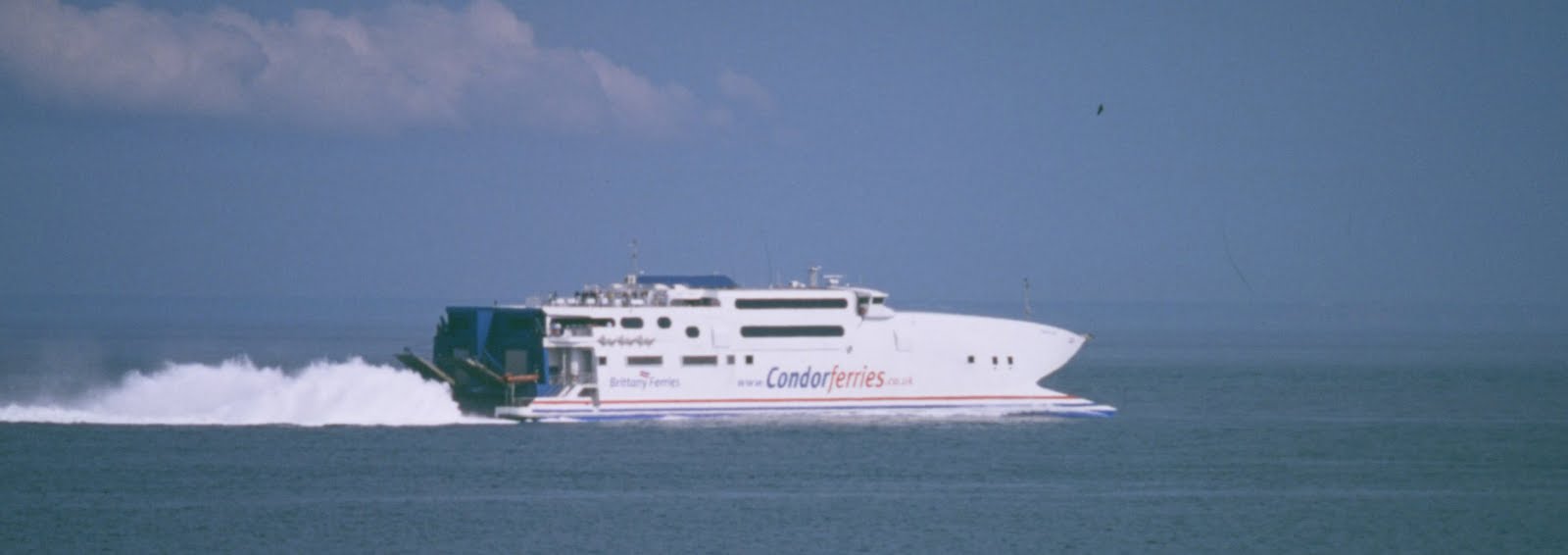
We’re at the start of National Ferry Fortnight. This is a campaign by the UK’s ferry operators to encourage us to go places by boat rather than just jumping onto planes.

This seems really relevant to us. Not only are we planning to go north to Shetland by NorthLink ferry in the next few days, but we’ve also decided to abandon our plans for a long haul trip in October and to instead spend some time using the many Caledonian MacBrayne ferries that frequent the west and north of Scotland.


There is something about going places by ferry that just feels more civilised than most forms of air travel – the pace of life is slower, there’s space to walk around (and to take pictures), you can eat and drink if and when you want to, and on overnight crossings it’s possible lie down in a real bed without needing to re-mortgage the house.


Ferries were always part of my younger travelling life.   I can recall many crossings of the North Channel between Larne and Stranraer, and also lots of times when summer holidays involved ferry routes.  Rosslare to Le Havre was always my favourite way of getting from Ireland to France, and some of the strongest memories involved using the Caledonian Macbrayne ferries to go to the Outer Hebrides.   I can even recall quite a few Dover to Calais crossings when I was student – this was the direct route for weekends in Paris before the Channel tunnel was an option.


Once my student days had passed I seemed to rather abandon ferries and go pretty much everywhere by air. I can remember the excitement when we booked CalMac to go to Islay about ten years ago. I also realised that although many things had changed in the UK over the almost 20 years since my last long ferry crossing, the meals on the CalMac ferry were still pretty much the same. Mind you it is hard to improve on fish and chips or scotch pies.

Over the last ten years I’ve left the British mainland by ferry heading in lots of directions – I’ve been across the North Sea to Norway and to Denmark, I’ve gone south from Weymouth to the Channel Islands and I’ve revisited the Outer Hebrides and gone north from Aberdeen to Shetland several times. In the case of the Shetland route lots of time in the last twelve months.


Getting to Shetland by the Northlink ferry takes much longer than the air route (even on FlyBe’s bad days), but it always feels like a more satisfying (and authentic) way to make the journey. No matter how bumpy the crossing has been it’s always good to see and on rough crossings feel the ferry come into Bressay Sound as it approaches Lerwick.

from MV Clansman in the Sound of MullThis autumn I’ll be heading up to Shetland, but I’m planning to do this by one of the more indirect and ferry intensive routes. Rather than heading to Aberdeen and getting the direct ferry from there we’re intending to head to Oban on the west coast of Scotland then use CalMac to go North via the Hebrides.


The first leg of the trip goes through the Sound of Mull then across to Coll and Tiree in the Inner Hebrides. After a few days there we head north west across the romantically named Sea of the Hebrides to Barra on the southern tip of the Outer Hebrides.


 From there slowly northwards to South Uist, Benbecula, North Uist, Harris and finally Lewis. When I first visiting the Outer Hebrides in 1975 that collection of islands would have involved lots of ferry crossings, now-a-days the Uists and Benbecula have been causewayed together so getting from Barra to Stornoway on Lewis only needs two short ferry crossings.


From Stornoway, the next step is eastwards across the Minch with CalMac to Ullapool then across Caithness and Sutherland to Gills Bay for the short ferry crossing to Orkney. Then finally picking up the Northlink Ferry for the overnight crossing into Lerwick.

As I've been putting these words and images together, I've realised how many of the routes I've mentioned have either changed or stopped operating altogether .  The ferry from Stranraer now goes into Belfast rather than Larne (although there is still a Cairnryan to Larne), the Rosslare ferry now goes to Cherbourg and the Newcastle to Bergen service I used to get to Norway has stopped altogether. And one of the services I've always wanted to use - from Shetland to the Faroe Islands - has disappeared before I got a chance to use it.

In places were the services receive a life-line subsidy the services do continue to run, but in other places where market forces dominate the routes are more than slightly vulnerable. I hope that National Ferry Fortnight does succeed in encouraging more passengers, I'd be really sad to see any more services disappear.


Leeds April 2011

Never look a gift trip in the mouth.

It’s all about overcoming prejudice.  When it was suggested that I might like to spend a day in Leeds, my first reaction was close to “Great. What’s second prize? Two days in Leeds?”.

I was wrong.  My two days in Leeds this month were entertaining, the weather was warm and sunny, the hotel was good and the food was excellent too.  Can’t think where I got my anti-Leeds (or is it anti-Yorkshire) prejudice from.

I’ve been to Leeds, usually to visit the University, quite a few times over the years, but I think the most recent visit was close to 10 years ago.  My overwhelming recollection is Bleak.  I remember the place being cold and usually wet.  It’s also an inconveniently long way North.  I should clarify that things only qualify as being an inconveniently long way North – in my book – if they involve being in the North of England; Scotland, Shetland, Norway, Iceland fall in a different category.  I’ve never claimed consistency on this point. 

I wound up staying on the 14th floor of the Park Plaza in the centre of Leeds – with a splendid view of the railway station, and far enough above it to not notice any noise – and spent most of my two days around the University.  I was trying to find ways to describe the University campus, and I’m pretty sure I recognise bits of it from late 60’s sci-fi films or TV programmes.  There are huge concrete buildings, fountains, elevated walkways linking the huge buildings and, during the Easter vacation, very few people.  All it was missing was the cast of Doctor Who (I’m picturing the folks from UNIT and Jon Pertwee) .  In the sunlight and with blue skies the campus looks really dramatic – but I bet it’s bleak when there’s a strong north-easterly blowing with some horizontal rain to accompany it.

Leeds April 2011


I guess my conclusion is not to judge places based on distant memories.  It’s always worth revisiting places, particularly if you can arrange to revisit them when it’s sunny.  Next time a trip to Yorkshire gets suggested I’ll ask about the third prize – maybe I’ll get three days in Leeds that time.


Being a tourist

One of the challenges of being at home is that you don't behave like a tourist.

At home there are regular pressures around things like doing the garden, sorting the laundry, doing the shopping and (heaven forbid) going to work. It's no wonder that being on holiday is more fun - there's time to do things like go to museums, sit and watch the birdlife, take photographs, sit in a coffee shop slowly finishing a cappuccino and even (just occasionally) doing nothing. This second set of things are just harder to fit in when I'm at home.

I think it's time to try and get the balance right, or at least better, even when I am at home. I've been taking at least one photo a day for a long time, the last day when I didn't take a picture was 23rd December 2004, but I think there needs to be a bit more than this.

So today is a landmark. For the first time (that I can remember), I've abandoned the gardening and left the laundry and come out to sit in one of the coffee shops in Headington to have slow (large) cappuccino - and a croissant - and to sit and read one of the magazines that arrived this morning and to write a blog post about being a tourist just round the corner from the house.

And to add another image to my occasional Cafes of Headington series.

Shetland March 2011

After Shetland in the snow in December and Shetland in the wind and rain in February, this was definitely Shetland in the spring.

The sun shone, the daffodils were out, the birds were starting to reappear on the cliffs and the wind didn't blow (too much).

I was really pleased to see the birds back on the cliffs at Sumburgh Head - fulmar, guillemot, razorbill and shag much in evidence and even one or two puffins putting in an early season appearance.  And I can't remember ever seeing so many oystercatchers - in one field near Bigton I counted over 60 oystercatchers farming the field to the slight consternation of the six sheep who thought it was theirs.

One unexpected sight was the Smyril Line ferry Norrona passing close to Sumburgh Head on the Sunday afternoon. At one time the Norrona used to call into Lerwick regularly giving Shetland ferry routes to a Denmark, Norway, Iceland and the Faroe Islands  - this service got caught up in a variety of legal and logistical knots resulting in the ferry now by-passing Shetland most of the time, and leaving Shetland with ferry links only to Aberdeen.  I'd be very pleased to see this service reappear.


Shetland March 2011

Room with a View

I'm sitting typing this looking out of the office window in Shetland. It's a beautiful sunny morning in late March - and the only domestic sound I can hear is the kitchen clock ticking in the background.  If I push the window open I can hear the waves in the voe just below the house, and the herring gulls and fulmar crying as they swoop down over the waves.  In the distance I can see Sumburgh Head and directly in the foreground the Scatness peninsula reaching down to Horse Island.  A little further to the right is Lady's Holm and behind it on the horizon the outline of Fair Isle. After dark last night I could see the three flashes of the Sumburgh Light and on the horizon the two flashes of the Fair Isle North Light.

This week the waves in Quendale Bay have been very gentle, a real contrast to the energy we saw on the last visit. The big winter storms were a reminder that just along the coast was the site of the Braer disaster in January 1993, even my ill-educated eye can see how much of the beach at Quendale was moved around last winter.

We first looked at the house 10 months ago, and finally bought it last summer.   At that time it was a freshly refurbished empty house and when we stayed there it felt a bit like a very lightly furnished rental cottage not unlike the ones we'd stayed in on previous visits.  Over the last eight months we've gradually filled up the house with our stuff - big furniture bought locally in Lerwick, smaller stuff  brought up from the south of England in several car loads, and pictures unearthed from various cupboards down south have finally been hung around the house.  It now feels like a northern home rather than just somewhere to visit.

My original plan had been to spend a lot of the summer up here watching birds and waves, and taking photographs as the days lengthened into Simmer Dim, and then gradually retreated into long autumn and winter evenings.  I'm actually only going to be able to spend a few weeks here over the summer but I will be based in Shetland over the dark months next winter and with the exception of a few trips to the southern hemisphere to see some sunlight and to take some pictures on some other remote islands,  I'll really be calling Shetland home.

One of the things I've always wanted to have in front of me is a sea view - this house has it in plenty.  However I must admit I'd never given serious thought to the fact that the view might be a problem. My Oxford view is a relatively unchanging (or at least slow changing) street or garden view.  My Shetland view is the constantly changing sea - each bird cry or crashing wave brings the possibility of something different happening, and even if there isn't anything dramatic the ebb and flow of the tide ensures that even minute to minute things do change.  It all makes it far too easy to look up from the keyboard, and then glance back and find that 20 minutes have somehow disappeared. Maybe in the winter it'll be easier to concentrate on the computer screen - although the hypnotic lights from Sumburgh Head might still be a problem.

Ten Top Travel Experiences

I blame the folks at Wanderlust Magazine – they sent a reminder that they’re asking for ten top travel experiences.  This is ten I put together at lunchtime today.  I’d probably pick a different set on other days.  I can see two themes – one involves getting up early, the other involves wildlife – which probably explains why the first one is the first one….

Penguins at Dawn.   Having gentoo penguins pecking my boots on the beach at dawn on Sea Lion Island while I tried to photograph them is a wonderful experience.  Wide angle wildlife photography doesn’t get any better. (Falkland Islands, 2009)


Polar bears dining.  Sitting in a Zodiac watching polar bears feeding on a whale skeleton – there were other people there but I was too absorbed watching to notice them. (Svalbard, 2010)


Lunch en route.   Sharing lunch with a local family on a steam train from Coonoor to Ooty.  The train was delayed – and the family travelling on the train with us produced leaves to use as plates and rice with serious pickles and insisted we share.  Now referred to as a ‘Palin’ moment – if it has been included in one of his travel programmes you would have assumed that it had been staged. (India, 1994)

Seeing forever.  Having read about how clear the Arctic air was it was amazing to arrive in Kulusuk and really see what this meant in terms of how far you could see. (Greenland, 2007)

Early Start.  Seeing the El Tatio Geysers at dawn – required a very early start from San Pedro de Atacama and many hours being driven along unlit and in places very rough roads over high passes but arriving at El Tatio as the sun just started to strike the geysers was more than worth it. (Chile, 2007)


Tiger's Nest. First close-up sight of the Tiger's Nest (Taktshang Goemba) – it’s first revealed through the trees in the distance high above you and occasionally re-appears as you climb up the track, then after a long haul when it’s completely invisible you suddenly reach a turn on the path and the Monastery is visible bathed (if you are lucky) in bright sunshine. (Bhutan, 2008)


Tiger. After several days seeing fresh pug marks along the tracks finally seeing a tiger in the wild for the first time at Nagarhole NP. (India, 1994)


Nesting Albatross.  Sitting on the edge of a black-browed albatross colony on Saunders Island. (Falkland Islands, 2009)


The Treasury.  First sight of the treasury in Petra after walking through the Siq first thing in the morning with no-one else around. (Jordan, 2006)


Getting in touch with your inner Viking.  Seeing Up HellyAa - everyone should do it at least once. (Shetland, 2007)

Back to the Candy Store

My annual visit to the candy store that is the Destinations Travel Show – wasn’t able to make the London version this year (too busy travelling) so it was up the M40 to the NEC this time.

Felt like a smaller scale event than the London show last year – or the Birmingham version I went to a couple of years ago – and it felt like there were more ‘lifestyle’ stands (No, I’m not interested in a massage, a new bed(!) or a static caravan – this is a travel show), but at least I didn’t have a fight with anyone from nPower this year.

My aim this year was looking for inspiration for travelling in the first few months of 2012 – and particularly contemplating slower travel rather than just jumping on a plane, doing some tourist stuff and then heading back to Heathrow.

I’m not going to manage a top ten this year, but the ideas I came away from the show contemplating were:
  • More time in South America – maybe the long route from Santiago to Buenos Aries (via Ushuaia)
  • Africa – still an embarrassing gap on my travel CV – perhaps overland Nairobi to Cape Town via Namibia
  • New Zealand – earthquakes not withstanding southern NZ has been on my ‘to-do’ list for a long time
  • More Islands – but given the time of year they need to be southern hemisphere ones – Borneo or Indonesia sound interesting (and in a part of the world I’ve managed to avoid so far)
I resisted the temptation to book anything at the show – but the dining room table is now covered with a big pile of brochures. Difficult business this trip planning malarkey.


Shetland February 2011

Finally got the chance to get back up to Shetland.  It feels like a long time since I was shovelling away the Christmas snow.

This was also the first time we’ve come up by boat in winter.  I’ve tended to regard the boat as the summer mode of transport and plane as the winter one.  However the pile of ‘things to go North’ in Oxford was getting inconveniently big, so a car/boat trip was required.

After several days of ferries between Aberdeen and Lerwick being cancelled or delayed it was a pleasant surprise that the ferry left Aberdeen on time.  The ‘pleasant’ bit lasted until we reached the end of the breakwater at Aberdeen Harbour – at which point we reached for the seasick pills and I retired to bed requesting that I be woken when Bressay was visible.
After a bumpy night – on a few occasions the boat seemed to keep rolling further and further (before eventually rolling back) - we docked in Lerwick pretty much on time.  There had been warnings that the MV Hrossey would need to slow down if it got really rough - but it clearly that hadn’t been deemed necessary.

We spent several days (some of which were pretty wild, wet and windy) at or near the house at the south end of the mainland, getting a few walks and taking a few pictures.  We finally saw some sunshine on our day in Lerwick, doing the things that need to be done there (i.e. coffee at the Peerie Cafe, lunch at Hay's Dock, and a wander round the fantastic Shetland museum).   The current visiting exhibition at the museum is the Lewis Chessmen, I heard about them before but never had a chance to see them, and I'll try and get back to see them again before the exhibition moves on.

The ferry south was heralded by more dire warnings, and we had a fairly rough passage back down to Kirkwall – from there south it was at sufficiently flat for some sleep to be had.  It was certainly a shorter return to Shetland than we had wanted – but we did get a bit more done to the house it’s now feeling much more like a northern home rather than just a house on Shetland.  It'll soon be ready for visitors!

Next trip only a few weeks away – this time I’ll be taking the plane….


Shetland February 2011

Utrecht February 2011

I’ve always felt a bit guilty about Holland.  

I’ve had it on my ‘been to’ list for years, but I think that was as a result of going to a Sunday market somewhere just on the Dutch side of the Holland-Germany border many years ago. (So long ago that it was actually the Holland-West Germany border)

A meeting of the IMS Global Learning Consortium finally provided the excuse to properly add the country to my list.

Flying into Amsterdam Schiphol let me see how well joined up the air and rail network is in Holland – about 20 minutes from getting off the plane to stepping onto the train.  Later reflection made me think about the complexities of not only combining this with roads and motorways, which many countries do, and with lots of waterways which is a bit more unusual.

Utrecht is a lovely small city, particularly the old part along each side of the canal.  The canal provides a very easy reference point for navigation, whenever you get lost just head back towards the canal.

Despite the need to spend a lot of the time in meetings (always the drawback of work trips), I did get a brief chance to wander around with a camera.  Pictures below.

At the end of the trip, I completely overlooked the efficiency of the Dutch rail network so I wound up getting to the airport far too early.  This gave me plenty of time to visit the branch of the Rijksmuseum in the airport (splendid idea – don’t recall seeing a branch of the National Gallery or the Tate anywhere in LHR T5).  And having done that I was able to tweet about it via the free wi-fi (again - don’t recall seeing any free wi-fi at Heathrow).

Utrecht February 2011

Little Horwood January 2011

In travel terms, a slow start to 2011. 

More than enough work to be getting on with and a lot of travel planning for later in the year.  I’m delighted to have another trip to the South Atlantic in the diary for next winter – including time back in the Falkland Islands and on a boat around South Georgia.

The one overnight trip in January was a work related overnight meeting, with my Media Management Team colleagues, at Horwood House in Little Horwood deep in the Buckinghamshire countryside between Milton Keynes and Buckingham.  A very picturesque location – a few images follow.

Horwood House January 2011

Shetland December 2010

The days between Christmas and New Year provide the opportunity to watch old films and eat rather too much (no doubt in an attempt to keep the calorie in-take up to Christmas and New Year levels).  And I’m very partial to both old films and eating.

However the “between-holiday” days do also provide a chance to do other things. 

A couple of years ago I spent the “between-holiday” days in Tromso attempting to photograph the northern lights.  That wasn’t a great success – it rained throughout the time I was there, and I went down with pneumonia immediately afterwards.

This year I opted to take the opportunity to go north again, this time as far as our house on Shetland.  The weather offered every possible option – there was snow on the ground when I arrived, and over the next few days I saw gale force winds, heavy rain, fog – and a little bit of sunshine too.  Although Shetland is capable of offering all of these over the course of a week a pretty much any time of the year.  In between the showers I managed to get out to walk on a number of the beaches around the south end of Shetland - and to take a few sunset pictures too.

In Tromso, I needed to get used to there being nothing brighter than twilight in the middle of the day.  On Shetland in December sunrise was just after 9 AM, and sunset shortly afterwards at about 3 PM.  The plus is that you can get you sunset pictures and still get home for afternoon tea.


Shetland December 2010


Shetland November 2010


Aiming to get up to Shetland for a weekend right at the end of November was always likely to be a little bit touch and go.  I was picturing lots of wind, some heavy rain and very bleak scenery.  I hadn't given much thought to snow - silly me.  Towards the end of last week the weather forecasters started talking about the arrival of early winter, and on Friday there was some evidence, not much in the south of England but definitely further north.

On Saturday morning I had the entertainment of an early drive up the M40 and M42 to Birmingham airport.  Not much traffic around but there was the occasional bit of white-out where there wasn't any evidence of lanes at all.   The flight from B'rum up to Edinburgh was pretty much on time and I was delighted to see (as I hit third breakfast) that the onward connection to Sumburgh was on time too.  I was starting to picture my walk on the beach and lunch at the Sumburgh Hotel.  However the news from Shetland wasn't encouraging, lots of snow around and it was taking time to clear the runway to allow my plane out to get to Edinburgh.

Delays stretched out ( and my plans, in my mind, changed too).  The walk went first, leaving a restock trip into Lerwick as the priority, eventually I realised that even doing this was going to be a challenge with the closing times and this was before I realised I was actually heading into something that looked like an arctic winter.  Finally picked up my very small rental car, and headed gingerly around the airport slithering and just made it up to the local shop at the south end of Shetland for an emergency restock before it closed.

Then headed to a very cold wee house, which is on a much steeper hill than it was on when we were last in residence.  Of course I didn't realise how steep the hill really was until I was part way down it - when it became apparent that I wasn't going to be able to get back up without assistance.  I found a suitable place to abandon the car and trudged through the snow to the house and got into the thaw-out process.  The real downside of storage heaters is that they need advance warning, so there isn't much scope for instant heat.  Did get one room reasonably warm, and ate my tea there, before unpacking the sofa bed for the first time and went to bed fully dressed (including Fair Isle hat) making use of all the available duvets.  Even had to fight with the fridge - it had decided that the kitchen was too cold to bother, and it was only when I set the fridge on its arctic setting that it would do anything at all.

First light revealed how much snow there was on the ground - 6 or 7 inches of really light powdery snow blowing around at the slightest provocation, and more still falling.  I could briefly see Fair Isle in the distance completely covered with snow.  After porridge made with a slice of milk (a consequence of the arctic fridge setting), the main morning amusement was a long walk along Quendale beach watching the fantastic changing light - a black, grey, white and orange pallet.  Looked as if the sky was on fire at times.

Post-walk, the car rental company came to haul me back up the hill - next time I'm getting a 4x4.  Throughout the day I'd been aware that normal plane noise was missing - my 16:30 flight to Aberdeen was feeling like a real longshot.  However the airport folks encouraged me to assume it would go as planned, and surprisingly it did, followed very shortly by a much earlier Aberdeen flight whose passengers had spent several hours sitting at the airport.

This all seemed good until about half way to Aberdeen when the pilot came on to say that the airport had now closed again, but that they were working on it, and we would just slow down a bit - how much can you slow down a plane?  It all sounded OK until he said that we still had plenty of fuel - I hadn't thought about fuel until that point.

Aberdeen airport was full of people waiting for flights some clearly settled in for the long haul.  My return flight to Birmingham was only 45 minutes late - and the pilot was happy to point out that Aberdeen was his warmest stop of the day (and that had included a visit to the Channel Islands).


The entertainments of winter travelling.

Shetland November 2010

Shetland October 2010

Exploring the South end.

We spent the first half of October getting to know the house, and getting to know the south end of Shetland mainland better.  Over the last few years we've spent a lot of time around the south end staying either at the Sumburgh Hotel or at the Pool of Virkie - somehow the trip was different this time, we were exploring our new patch.

There are several bays, beaches and headlands either within walking distance or a few minutes drive away.

The real local area is the beach at Quendale - which was pretty reliable for both seals and porpoise, in addition to various and numerous seabirds - even in October.

Further west from Quendale are Garths Ness (where the Braer ran aground and broke up in 1993 - shedding 85,000 tonnes of crude oil into the water and onto the beaches) and Fitful Head.  Fitful Head, like all the high points around the southern end of Shetland is topped by both warning lights and radar stations.  One to ensure that planes can find the airport at all, the other to ensure that they avoid the hill tops on their approach.  The need for the warning lights is demonstrated by the memorial to the crew of a Halifax bomber that flew into the cliffs below Fitful Head in March 1942, heading back from Norway to their base at Kinloss.  Fitful Head is probably the only place from where it's possible to see both Fair Isle 25 miles to the south, and Foula 20 miles to the west.

Due south of our cottage is the Scatness head land - we visited there briefly a couple of times on previous trips but had not had very satisfying visits.  I can't recall why we weren't taken by it then - this time it was different.  We spent time watching the waves and picturing what life must have been like living in the old block house at Ness of Burgi.

Sumburgh Head and Compass Head are the southeastern corner of Shetland – Sumburgh Head grabs the headlines with its lighthouse and RSPB monitored bird cliffs (even in October there are a surprising number of fulmars still around, presumable staking their claims for the prime nest sites next year) but Compass Head is actually higher and has the expected lights and radar installations – and an excellent (close to pilots eye) view of the airport.  If you follow the coast north from Sumburgh Head you cross Compass Head, and then drop down to Grutness where the Fair Isle ferry sails from.  The little headland beyond Grutness is another beautiful spot to watch the waves at this time of year, and to dodge the aggressive terns during the spring and summer.

My other final favourite spot is St Ninian’s Isle – the island is linked to the mainland by a magnificent shell sand tombolo – and is dramatic at any state of the tide, and at any time of year.  It was recently voted Scotland favourite beach – it not hard to see why.

No trip to Shetland would ever be complete without talking about the weather.  A pretty major storm stopped the Northlink Ferries at Lerwick just before we were due to travel north, so we wound up getting there 48 hours later than planned.  After that the weather was splendid – several days of strong winds from the south meant dramatic seas and blue skies, and after that the winds dropped and eventually swung round to come from north.  To spend two weeks on Shetland in October with hardly a drop of rain must qualify as pretty fortunate.

A few photos from this trip are linked below.

Slovenia September 2010

It’s confession time.  Until a few weeks ago, I knew very little about Slovenia and really only had a pretty limited grasp of where it was.  My school-acquired knowledge said things like it used to be part of Yugoslavia and it probably wasn’t very far from Italy. Or was that Slovakia?

I’m delighted to report that I know a bit more Slovenia now, I’ve certainly figured the difference between it and Slovakia – and it’s a splendid place to spend a few days, particularly in September.

I’ve got a sneaking suspicion that the BBC don’t know where it is either – before I went their weather forecast was that it was going to be damp and cool, and after I got back the forecast for Ljubljana was pretty much the same.  However, when I was there it was warm and sunny and most folks (perhaps excepting those relying on BBC weather forecasts) were wandering around in shirt-sleeves.

I was trying to find a way to sum up Ljubljana in a few words – “cafes” and “bicycles” are the first two that came to mind, and “carnivore” is probably the third.  This trip (I should say that I was actually in Ljubljana for an ASPECT project management meeting, before anyone gets the idea that I was on vacation) was the first one where the standard hotel booking included bed, breakfast, internet access and bicycle hire.  The centre of Ljubljana is pretty much entirely pedestrianised and every one appears to get around on bicycles, and (with the exception of the castle up on the hill overlooking the river) the city is flat enough to encourage cycling.

The centre of old Ljubljana definitely still has a “Hapsburg” look about it – the similarities with Prague and Vienna are certainly pretty strong, but here the river is well marshalled through the centre of town – with lots of bridges - and each side of the river is lined by cafes.   The huge number of cafes and the absence of motorised traffic give a really calm and relaxed pace to the centre of a fairly major city.  I’ll certainly be trying to get back to Slovenia again – I think it’s probably an ideal place for a long weekend (at least in the summer or autumn), and next time I’ll try and make sure I’ve got time to get up into the mountains or down to the coast.

And the carnivore bit – the traditional restaurant menus leave you in little doubt that meat is big is Slovenia.  I sidestepped the stallion steak, but did have vension, wild boar, and what looked very much like Slovenian haggis.


Slovenia September 2010

Shetland August 2010

A Tale of Two Bank Holidays

In May we spent a couple of weeks on Shetland – some of the time was spent touristing with a group of knitters we’d encouraged up from the South, much of the rest of the time was spent house hunting.

We looked at lots of houses – some needed an awful lot of work, some we just didn’t like and some we fell in love with, but none of them were right.  We pretty much gave up on the exercise – we filed it in the “we’ll do something about this next time” box. Then we screwed up reading the arrival time of a flight at Sumburgh Airport where one of our knitters was due to appear.  Sumburgh Airport is pretty small, and on this particular day had a seriously wobbly electricity supply so we couldn’t even get a coffee while we were waiting.  So as wondered what to do with the couple of hours we had to spare, we recalled seeing details of a house about 5 minutes drive from airport.  There couldn’t be anything to lose in having a quick look at one more house – it really was the last one we were going to get time to look at - after the long list we’d already seen and discounted.

Of course this house was different – freshly refurbished, a view of Sumburgh Head and Fair Isle in the distance, and within budget.  All this was happening on the Friday evening of a Bank Holiday weekend.  To cut a long story short – by 4:55 pm on the Bank Holiday Monday, we’d had a look at the house from the inside, been through the survey, found a local solicitor (a lawyer in American English), discovered that someone else had made an offer on the house, made our own offer and had it accepted.

On the Friday of the August Bank Holiday (about the time we’d seen our house on the May Bank Holiday) we were driving North out of Oxford with a very heavily laden car – camp beds, camping chairs, a folding table plus a selection of other household essentials ready to move up North.  Over the next few years I’m expecting to drive up from Oxford to Aberdeen to catch the overnight ferry to Lerwick quite a few times.  This time our emotions ranged from disbelief (Do we really own a house on Shetland?) via excitement (We’ve wanted a house somewhere remote for a long time) to trepidation (Did we really sink most of our savings into a house we looked at for about 15 minutes?).

The driving was fine (for a Bank Holiday weekend), the ferry crossing was smooth and the house was everything we’d hoped it was going to be.

For most of the week, the sun shone and the winds were light.  We walked on the beaches at Quendale, West Voe and St Ninian’s Isle.  We sat in the front room and looked out towards Sumburgh Head and to Fair Isle.  And from the bedroom window we were able to see curlew in the fields and both gannets and porpoises (or were they dolphins?) in the bay in front of the house.

Around  the domestic stuff (figuring out how the electric and gas worked, sorting a phone line, ordering kitchen appliances and furniture),  I spent some time taking pictures and my other half networked with the knitting fraternity at the In The Loop conference.

We’ll no doubt have trips up to Shetland when the weather is foul, and the ferry crossing is deeply unpleasant, but on this visit everything was perfect.  If you’d told me that my ideal holiday would involve ordering fridges, buying paint and weeding, I might not have believed you.  On this trip it did, and it was.

I’ve also needed to revisit one of my blog postings from earlier this year.  In May I asserted that North started at 60 degrees north – I’ve changed my mind.  North now officially starts at 59 degrees and 52 minutes north. That's just about where my new front door is.


Shetland August 2010

Svalbard June 2010

Travel guidebooks and, indeed, tour leaders have a predilection for adjectival overload.

“Svalbard is the destination for an unforgettable holiday.  This wonderous archipelago is the world’s most accessible piece of the polar north and one of the most spectacular places imaginable” [Lonely Planet]

“The islands of Svalbard comprise an Arctic wilderness where nature reigns supreme” [Bradt guide]

“A journey around the spectacular Arctic region of Norway's Spitzbergen Islands takes you into a remote land of dramatic icy peaks and glistening glaciers.” [Exodus website]

“..this will be a very special expedition.” [Exodus/Quark Expeditions trip notes]

And these all understated the trip.

I (and about 100 other fortunate individuals) were lucky enough to be able spend 11 days on the Akademik Sergey Vavilov exploring Svalbard – over the course of the 11 days we covered about 1500 nautical miles, had ten zodiac cruises plus three landings, saw at least 22 species of birds and watched walrus, seals, dolphins, whales, reindeer and arctic foxes.  And saw and photographed a huge number of polar bears.  As each day passed the adjectival overload got more extreme – and hearing haggard (and some not so haggard) arctic veterans waxing lyrical about what they’d seen on each outing really did start to help us “high-arctic novices” realise quite how good our fortune had been. There was a real sense of disbelief that things could go on at such a pace – but they did.  The bar talk (often huddled around laptops) allowed everyone to enthuse about what they’d seen and to share superlatives with someone else who’d seen pretty much the same thing.  By the end of the trip the enthusiasm was being tempered (just slightly) with discussion about how much space was left on memory cards – and whether it was reasonable to delete a perfectly exposed and framed image of a polar bear (now just a “PB”) because it happened to have one eye closed at the moment the shutter was pressed.  At the start of the trip every PB was getting extended photographic attention, by the end of the trip it wasn’t really worth slowing the zodiac unless it was mother with at least one cub, and preferably two.

The trip started at Longyearbyen and headed south towards the southern tip of Spitsbergen.  Our polar bear spotting got off to an early start with a single bear spotted at the end of Hornsund.  With hindsight one could have suggested that this sighting was staged by the expedition staff to let us see just how challenging it was to spot a slightly-ivory-coloured bear over a mile away across fast ice at the front of a glacier.  On day two the bear spotting got easier, much easier.  The intention had been to spend the day cruising along fast ice looking for bears, in fact one of the expedition staff sitting in the bar spotted a bear in the water just after breakfast and cautious manoeuvring of the Vavilov allowed us to get close enough for a clear look at the bear swimming before it headed off onto the ice and into the mist.  The decision was made to just sit still and see what happened – eventually the curiosity of the bear (a young male) got the better of it and it choose to come back out of the mist and to have a good look at the ship at close quarters. It didn’t quite get as far as trying to head up the gangway, but it was clearly very interested in learning a bit more about us.  Having had a close look at us, and done a few of his party tricks, he opted to head back off into the ice, and our expedition crew got to make one of the harder calls of the trip.

We were told that the ship had been given a really ‘hot’ tip, and that despite the fact that we had already been very fortunate in the southern part of the islands, we were going to spend the next 24 hours steaming north as fast as we could, to an undisclosed destination.  Speculation ranged far and wide – there was a mother and cubs to be seen, a whale had been washed ashore, we were heading to the pub in Ny Alesund to watch the England – Germany match.  The crew and expedition staff said nothing.

Early afternoon on the third day saw us just outside Holmiabukta near the northern tip of Spitsbergen island – and finally getting the chance to see what the hot tip was.  We were rewarded almost immediately with a single bear on the water’s edge, then another adult with a cub in tow, then on the far side of the bay another adult, and another female with cub.  The sequence just carried on, on both sides of the bay until we’d seen at least 9 different bears.  Eventually the crew called for a return to the Vavilov for dinner, before a return trip in the evening by which time the sun had shifted, and the tide had gone out (tides are apparently very difficult to figure in/around Svalbard).  The evening light revealed a bear plus cub on the ice at the foot of the glacier at the end of the bay, and the falling tide revealed the remains of a whale that was clearly the real driver for the bear-related activity around the bay.  Above the waterline was a picked-clean whale spine, below the water was clearly enough rotting meat to provide for a lot of bears.

From the “Bay of Bears” we headed on northwards to Woodfjorden, and the Andoyane islands.  The islands are mainly bird reserves – and gave fantastic views of Red Phalaropes and King Eider, but the PB’s just wouldn’t let up and we found a freshly washed bear around one of the islands – this time even more dramatic against a dark island background.

Leaving the bears behind for a few days we forged further north crossing the 80 degree line (it’s always good to clock up another geographic landmark) to be greeted by a group of walrus near Moffen Island – finally dropping anchor in Sjuoyane, the northern-most part of Europe (80.6 N).  This really did feel bleak, the bright sunshine that we’d been enjoying continuously since leaving Longyearbyen disappeared into the mist, and it wasn’t difficult to realise that we were just a few hundred miles from the north pole.

As we headed southwards we stopped back at Holmiabukta to see if there was any more bear action.  This turned out to be the most dramatic photographic day of the trip.  We spent about 8 hours in zodiacs around the bay in two extended sessions, watching bears (and cubs) in every direction – pretty much just getting on with being bears.  From solitary older male bears, to a mother nursing a young cub.  From the antics of a small bear as it tried to get scraps its mother had pulled from the whale skeleton to an indulgent mother watching her two curious cubs investigating our small flotilla of zodiacs.

The trip provided truly amazing opportunities to see polar bears in their natural habitat, doing what bears do – I’ll be picking through the pictures I took for many weeks, and I’ve not said much about visits to bird colonies, the chance to see walrus, reindeer and arctic foxes in the wild and the fantastic scenery around many of the glaciers.

The pre-trip puff had promised “a very special trip” – but I think it far exceeded even the wildest imaginings of the crew.  Paul Goldstein infected everyone with his photographic expertise and enthusiasm (and adjective collection) and ensured that we all got back to the UK feeling pretty seriously sleep-deprived but with amazingly good photographs.  Woody and Annie and the rest of the Quark Expeditions crew (and the captain and crew of the Vavilov) provided fantastic access to the wildlife, and Ian Stirling both interpreted what the bears were doing for us, and ensured that we weren’t influencing the bears behaviour adversely.

It was also a privilege to spend 10 days with so many fantastic photographers – I learnt a huge amount just by talking to other people and seeing what they were doing, and how they were doing it.

This was my first trip on the Vavilov.  It won’t be my last – the only question now is whether to book a return trip to Svalbard next, or to head back to Antarctic.

I also took far too many pictures - a few that have grabbed my attention as I've started to go through them are linked below.


Svalbard June 2010

Shetland May 2010

"It’s going to be a bit lumpy today".  There are certain phrases that just aren’t good, and the lumpy phrase is way up there.  From the kitchen it suggests that the custard might not be up to scratch (not a phrase I hear at home, I should add), but not a real problem.  When the grinning skipper of the Good Shepherd IV says this standing on the pier at Grutness, it definitely falls into the problem category.

The Good Shepherd IV is the maritime lifeline that links Fair Isle with the rest of Shetland.  There is an air service too (at least when it isn’t foggy) but all the heavy cargo, and the more intrepid travellers, go via the Good Shepherd.   This Good Shepherd has been shuttling back and forwards between Fair Isle and Grutness harbour on the southern tip of Shetland for about 25 years.  It carries 12 passengers and up to one car (although that needs to be winched on) and pretty much all the supplies that the island needs.  The Good Shepherd was purpose built for the Fair Isle run, and is reputed to be able to cope with pretty much any weather that  the seas around Shetland can throw at it , I’m not sure that the same can be said of this group of passengers.  The skipper was true to his word on this trip - after 45 minutes I thought we were all going to die, and after 90 minutes I was pretty sure that death was the preferred option.

The trip on the Good Shepherd was the start of the second part of our Shetland trip for this summer.  We’d spent the first part of the trip house hunting (more about that roller-coaster in a later post), and  for the second  part of the trip we’d been joined by a group of knitters from Oxford, London and Edinburgh all of whom wanted to learn more about knitting on Shetland and Fair Isle.  There’ll be more about the knitting trip on my others half’s blog in due course.

The Fair Isle leg of the trip was based with Kathy Coull and provided lots of "craft-in-croft" experiences, and gave me time to walk round the island photographing the bird life and just enjoying being out in the fresh air (as well as trying my hand at spinning).

One of the most striking things about the trip was the weather, during the seven days that our friends from the south spent with us we saw no rain at all.  For these folks, most of whom were visiting Shetland for the first time, dry, warm, mostly-windless weather is ‘typical’ Shetland weather.  I suspect their subsequent visits might not be quite so benign.

On the Mainland part of the trip, we spent time around Nesting, Sumburgh and Lerwick  - as well as going over to Bressay and up to Hillswick and Eshaness, and to the woollen mill at Sandness.  It was good to finally get a chance to look at the wonderful new museum - our previous attempts to do so had got derailed by (i) its opening ceremony, and (ii) fog delays on a previous return from Fair Isle.

On the mainland we stayed at Heart Stones in Lerwick - a lovely flat really close to the Museum, and it will be very convenient for Mareel once it's finished.

As always it was good to be back above 60 degrees North - and a real joy to be back on Shetland.

I’ve added a few more photographs to my Shetland collection on Picasa - just click the thumbnail below.

Shetland May 2010

Barcelona May 2010

An annual trip to Barcelona is a good idea.  


It's 12 months since I was last there and this time (Icelandic volcanoes not withstanding) I got to be a tourist.  On my previous trips I managed to grab a few hours to be a tourist, this time I had a whole day to just wander around town.  I spent lots of time on La Rambla and in Port Vell (probably my favourite bit of Barcelona).   My plans for a quiet dinner on the Sunday evening were rather disrupted by Barca winning at home to retain the Spanish League title - it made for a rather boisterous and very photogenic few hours in the Placa Catalunya.


Eyjafjallajokull did it's best to disrupt my return flight - but the disruption was rather less dramatic than in April.  I had briefly hoped that I was going to get struck in Barcelona for a few more sunny days.  Maybe next time.


Barcelona May 2010

Looking North

I’ve been thinking about the North again, reflecting on my previous trips, and anticipating the two trips I’ve got to the far North over the next couple of months. Before I go much further I’d better define "North". I toyed with using the Arctic Circle as my definition of North, but eventually decided that 60 degrees north made more sense. 60 degrees means I can (just) include the northern extremities of the UK in North. Lerwick (60.2N) on Shetland is just north of the line, there’s even a sign on the side of road between Sumburgh and Lerwick to mark the spot.

I first got to 60 North in 1972 when I toured southern Norway with my parents - we went through Bergen (60.4N), and the most northerly point I can find evidence of is Eidsbugarden (61.4N) in the Jotunheimen mountains.

My next trip that far north was in 1984 - this time a skiing trip to central Norway, flying to Oslo (59.9N) then getting the train to the area near Vinstra (61.6N). My recollections from that trip are very vague, and most of the photographs from the time seem to include evidence of a significant amount of alcohol which might be a factor in the quality of recollection.

It was almost 10 years before I ventured north again. It was June 1993 when I spent a week (notionally working) in St Petersburg (60.0N). It might be just stretching a point to include St Petersburg itself, but we did go out along the coast towards the Swedish boarder one evening which certainly took us over the line. That was the first time I was conscious of the "White Nights", when it never really gets dark and I was able to take photographs of the Neva at 11 pm.

After that it wasn’t until 2004 that the North came calling again, and since then I’ve made 8 trips that have crossed the 60 line. 2004 involved a return trip to Norway, again crossing to Bergen, this time rather than heading cross country towards Oslo the trip was much more north focussed. We turned left out of the ferry gates in Bergen and headed north through Alesund (62.5N) and Trondheim (63.4N) until we reached the Arctic Circle (66.5619N). That felt like an important landmark, and it really was a struggle to make myself turn the car round just after we crossed the Circle.

2006 was my first visit to Iceland, flying into Keflavik (64.0N), then spending time in Reykjavik (64.1N) before heading along the south coast as far as Hofn (64.2N) and up to the original geyser at Geysir (64.3N). At some point we must have gone straight past the Eyjafjallajökull (63.6N) without giving it a thought.

In 2007 I stepped up the pace somewhat clocking up three trips which crossed my North boundary. The first two were both to Shetland, spending some of the time just south of the line at Sumburgh (59.9N), some time in Lerwick (60.2N), and getting as far north as Hermaness (60.8N) on Unst. The British Isles pretty much runs out at that point. The two Shetland trips were also at extreme points in the year. First in January, when the Shetlanders get back in touch with their inner Viking for the Up-Helly-Aa festival, and then in June when there is the Shetlandic equivalent to the "White Nights", the "Simmer Dim". A little later in summer 2007 my inner Viking took me back to Iceland, again to Reykjavik (64.1N) this time as a stepping stone to eastern Greenland. I spent time in Kulusuk (65.6N), notable as being one of the very few places on the east coast of Greenland that has a real runway - a leftover from the American Cold War activities, and at Tasiilaq (also 65.6N), one of the few real towns in eastern Greenland. You can tell it’s real town because it’s got proper roads, you can’t go anywhere on the roads, they stop at the edge of town, but they are there.

I kept the pace up in 2008, again clocking up another three North trips, back to Shetland again - Virkie (59.9N), and Lerwick(60.2N) - in the height of summer to watch the puffins and gannets, and to Helsinki (60.2N) in November and Tromso (69.7N) in December. The Helsinki trip was a city break, with the only goal being to enjoy discovering the city. The Tromso trip was a thwarted attempt to see and photograph the Northern Lights. It rained and I failed on both counts - and got a souvenir case of pneumonia to mark the occasion. I did however get a little bit further up the coast to Skjervøy (70.1N), marking my first crossing of the virtual line at 70 degrees north.

Since then I’ve not managed to get to the North, but the next few weeks should remedy that. We’re heading back up to Shetland again. We’ll certainly get as far north as Lerwick (60.2N) and maybe a little further. Shortly after that I should (volcanoes permitting) be heading up to Longyearbyen (78.2N) in the Svalbard archipelago, and hopefully as far north as the 80 degree line.

So what keeps dragging me back to the North? Aside from wanting to get in touch with my inner Viking. My father’s family come from Tain (57.8N) in the north of Scotland - maybe there are genes from further north there too. I’ve got at least two theories about the pull of the North. The light is fantastic (at least in the summer), there is daylight for most of the 24 hours and the air is usually (Icelandic volcanoes not withstanding) amazingly clear. One of my strongest memories from the Greenland trip was getting off the plane in Kulusuk, and realising how far I could see - that clarity really came through in some of the pictures I took. The other factor is people, or more critically the lack of people. Southern England is full of people and the roads are full of cars - the further north you go the quieter places are, and the pace of life is slower too. There also isn’t much sign of wilderness here in Oxfordshire (51.8N) - and a little bit of wilderness always leaves me feeling better.

I’m looking forward to my upcoming trips to the North, and I’ve got a really strong urge to plan some more.

The North